
Collective Intelligence, Futures, and Liberating Structures
A conversation between Keith McCandless and Gianluca Gambatesa
Preamble
Gianluca Gambatesa is a Liberating Structures maestro and hands-on futurist exploring the intersection of distributed wisdom, foresight, and participatory action. His work cuts through conventional leadership advice to link our private hunches and immediate next steps directly to the powerful forces shaping our shared futures.
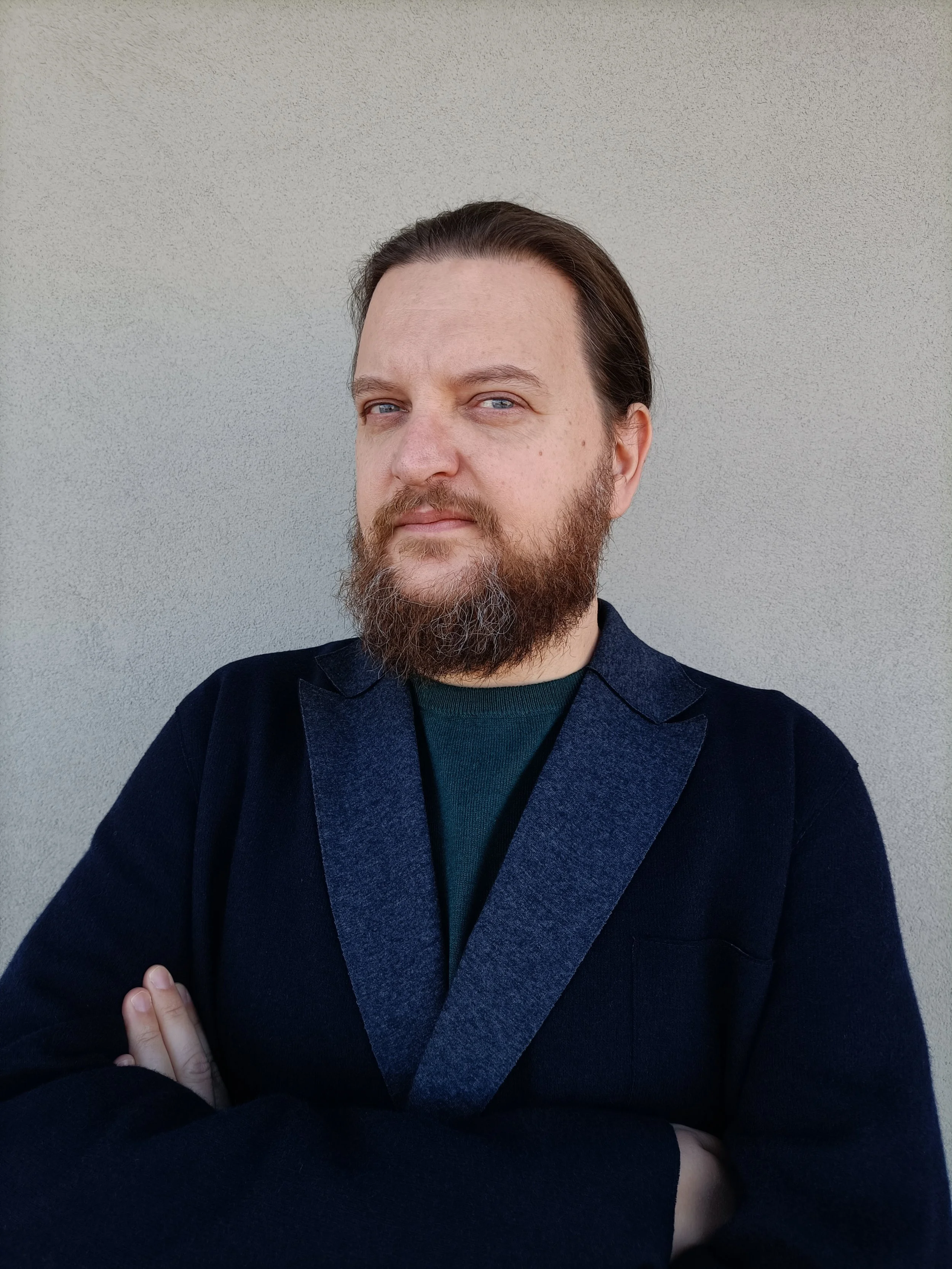
In Gianluca’s words:
"Collective intelligence is the long-term consequence of the quality of interactions within an organisation."
Rather than treating collective intelligence as an ad-hoc emergency toolkit deployed during a crisis, Gianluca frames it as a capacity that only performs under pressure if it has been deliberately cultivated during routine, calmer times:
"Collective intelligence rarely appears in moments of urgency unless it has been cultivated over time... Liberating Structures intentionally cultivate the interactions through which collective intelligence can emerge."
[We had 60 minutes together via Zoom. The interview is edited for length.]
Making the Familiar Strange: Futures Grounded in the Present
Keith: I started thinking about your work, and I realized I don't know whether you describe yourself as a futurist. Do you?
Gianluca: Usually not. I tend to say that I work with futures. Over the last few years, I’ve found myself focusing more on skills than roles. Roles can be useful when you need to market services, but roles imply power and create habits. What people actually need are the skills to facilitate themselves and explore futures together.
My approach is: let’s visit possible futures so that we can look at the present from a different perspective. It’s similar to what anthropologists talk about: making the familiar strange and the strange familiar.
There are larger structures we are immersed in that are difficult to see precisely because we are inside them. You need to go somewhere else—somewhere the rules are different—and ask: What about the rules we've been taking for granted? It’s not about preparing for the future; it’s about designing a different present so that a different future becomes possible.
Bringing Theory and Practice Together
Keith: That bridges theory and practice directly. How do you share that underlying theory with participants while navigating messy organizational realities?
Gianluca: I love bringing theory and practice together. Reality is a mess, and theories are so elegant! But when you are immersed in a context, you start noticing patterns and can articulate theory straight from the ground up.
I share the reasoning behind design choices with people right in the middle of facilitation. For example, with 1-2-4-All, I invite people to notice the timing: the exact amount of time needed to start shaping an idea without falling in love with it.
When you give someone one or two minutes, it is enough to start shaping a thought, but not enough to make it complete. If you have already polished an idea to perfection in isolation, changing your mind becomes painful. At the end of 1-2-4-All, everyone sees a seed of their own thinking in the shared outcome. When people pause and ask, “Why one minute? Why two minutes?”, they realize the constraints are intentional.
Notice the Shift: Did You Change Your Mind?
Keith: I often pause right after a structure and ask, "What was liberated and what was structured? What did you notice?" The discomfort of swift pacing has a purpose.
Gianluca: I do something very similar with Impromptu Networking. I ask people whether they changed their minds during the three iterations.
It is powerful when people realize that their initial idea transformed simply by sharing it. While talking to a partner, you observe their reaction, receive immediate non-verbal feedback, and notice what resonates. Then you listen to them, and an unexpected connection surfaces. In just a few minutes across three rounds, the idea shifts. It proves that our environment and interaction patterns actively co-create our thinking.
Another recurring pattern: participants mention how rare it is to speak for two minutes without interruption. At first, they feel rushed. Then they discover that two uninterrupted minutes is actually spacious.
Typical features of conventional patterns include: ideas over-developed in isolation; chronic interruptions generate conversational fatigue; collaboration is summoned only during emergencies; and, outside experts own the process. In contrast, the attributes of liberating patternsinclude: rapid iterations prevent premature attachment; generous, uninterrupted turns to think out loud; daily interaction habits built in routine times; and, distributed hosting skills left behind with the group.
Cultivating Everyday Habits in Calm Times
Keith: Many leaders treat collaboration like a fire alarm—they call a high-stakes summit only when an emergency hits, and then wonder why people freeze.
Gianluca: That insight came out of frustration. Over the last decade, I’ve seen leaders call people together only when there is a massive crisis. The unintended consequence is that people become conditioned to fear gathering: “If they are calling a meeting, there must be a disaster.”
Think of it like a personal relationship. With a partner, you talk every day about the small details, the routine observations, the joys, and the frictions. When a major crisis hits, working through it together is an extension of what you already do daily. What changes is only the scale of the challenge.
The real value of Liberating Structures is establishing daily patterns where people appreciate each other’s thinking and build on it routinely. The "break the glass in case of emergency" approach fails because you cannot demand psychological safety on the spot. If teams haven't practiced honest listening during calmer, routine times, a one-off workshop won't save them.
Beyond Typical Metrics: The True Measure of Spread
Keith: How do we help leaders recognize value without falling back on rigid, reductive performance measures? What tells you the practice is truly alive?
Gianluca: While visual evaluations like triads help teams track shifts in trust and clarity during a session, the true measure of success is whether people keep working this way when you leave.
When I work in healthcare with doctors and nurses facing burnout and siloed hierarchies, the real indicator isn't a post-session evaluation form rating things from 1 to 10. The magic happens when a nurse or coordinator takes a structure back to their unit's weekly huddle.
Colleagues walk out of that meeting asking: “What did you just do differently? Why did that actually work?” That spontaneous, peer-to-peer spread is the real metric.
A liberating structure serves a dual purpose: it protects you from the temptation to over-manage the room, and it safeguards the group from your presence. By distributing space and participation equally, it prevents you from doing work that is far better done by the group itself.
What Needs to Be Invented?
Keith: Is there something that still needs to be invented in the repertoire to support this long-term developmental journey?
Gianluca: I am fascinated by rituals that harvest daily signals of change—micro-practices that help groups notice weak signals before they turn into full-blown crises.

I have been prototyping a variation of Spiral Journal that looks across time. You pose a core prompt and explore it through four distinct quadrants:
The perspective of the past (memory and origins)
The perspective of the present (immediate reality)
The perspective of possible futures (emerging horizons)
The unresolved tensions and patterns between them
Memory filters the past through our present state, just as our view of the future is partly shaped by where we sit today. You have to make peace with being situated in the present while threads from both the past and future act upon you simultaneously. You cannot invent a future entirely from scratch, because whatever you imagine is shaped, in part, by what you carry forward.
Threads to Pull
Keith: That reminds me of structures like Drawing Together and Future~Present—they bypass intellectual defensiveness and reveal underlying relationship patterns across time.
Gianluca: With Drawing Together, universal meaning and individual meaning coexist effortlessly. You don’t have to dissect or defend your drawing for someone else to feel the depth behind it. It generates immediate, shared empathy.
When you offer groups simple, reliable interaction patterns, you don't need to hand them a top-down vision. You give them the capacity to see where they are, listen without armor, and pull the threads that shape their own future.
Closing
Keith: Gianluca, many thanks for sharing how you think about practice. Fabulous and helpful for everyone who is sharpening their repertoire. Anything else you want to add?
Gianluca: Thanks Keith for having me, loved the conversation! For anyone who’d like to get in touch or continue the conversation, you can find me here https://sharedfutures.substack.com/
Liftoff Questions
Where are you relying on collaboration only when a crisis erupts? What routine meeting could become a weekly training ground for listening and shaping ideas together?
Looking at your next agenda, how does your design protect you from the temptation to over-manage—and safeguard the group from you doing work that belongs to them?
At the end of your next 1-2-4-All or Impromptu Networking, pause and ask: “Did your initial idea change as you talked with others, and what caused it to shift?” What happens when you make that simultaneous mutual influence visible to the room?
