
Try Your First LS
You don’t need a certification, a budget, or a formal mandate to change how people work together. You just need the willingness to try something different.
Here’s advice about taking your first step.

One LS Principle to amplify as you get started: Emphasize Possibilities - Believe Before You See.
1. The Attitude: Someone Has to Go First

Every shift away from conventional, tedious meetings begins with a single act of courage. Waiting for the "perfect time" or “alignment” usually means nothing changes. Be the person who introduces a new pattern. Your role isn't to be an expert; it's simply to invite people into a better way of interacting.
The Key Point: If you want a different outcome, you have to change the structure of the interaction. Someone has to step up—let it be you.
2. The Practice: Honor the Basics
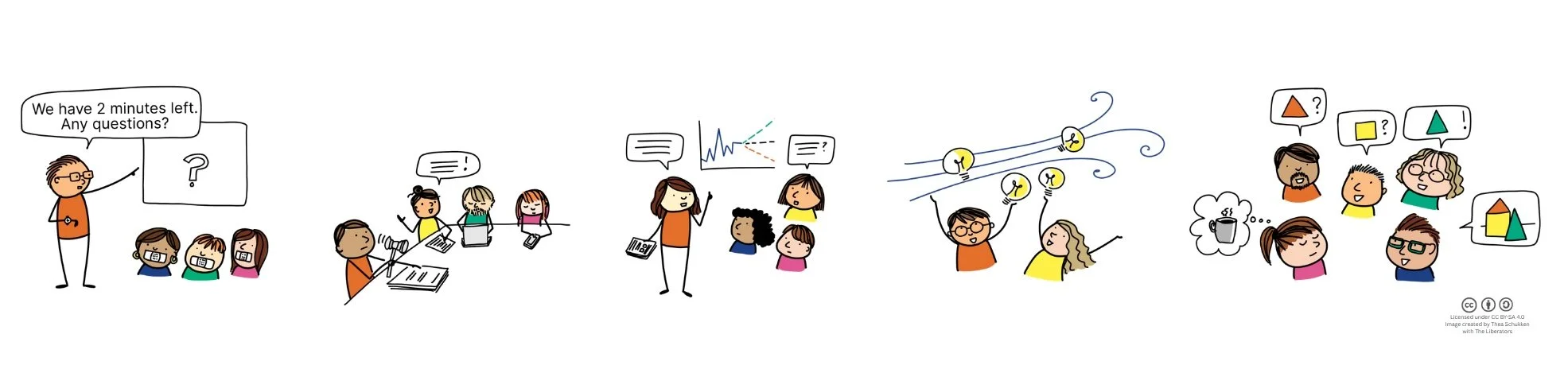
The Problem Isn’t the People; it’s the Structure
Strictly Regulated < < < > > > Uncoordinated, Planless
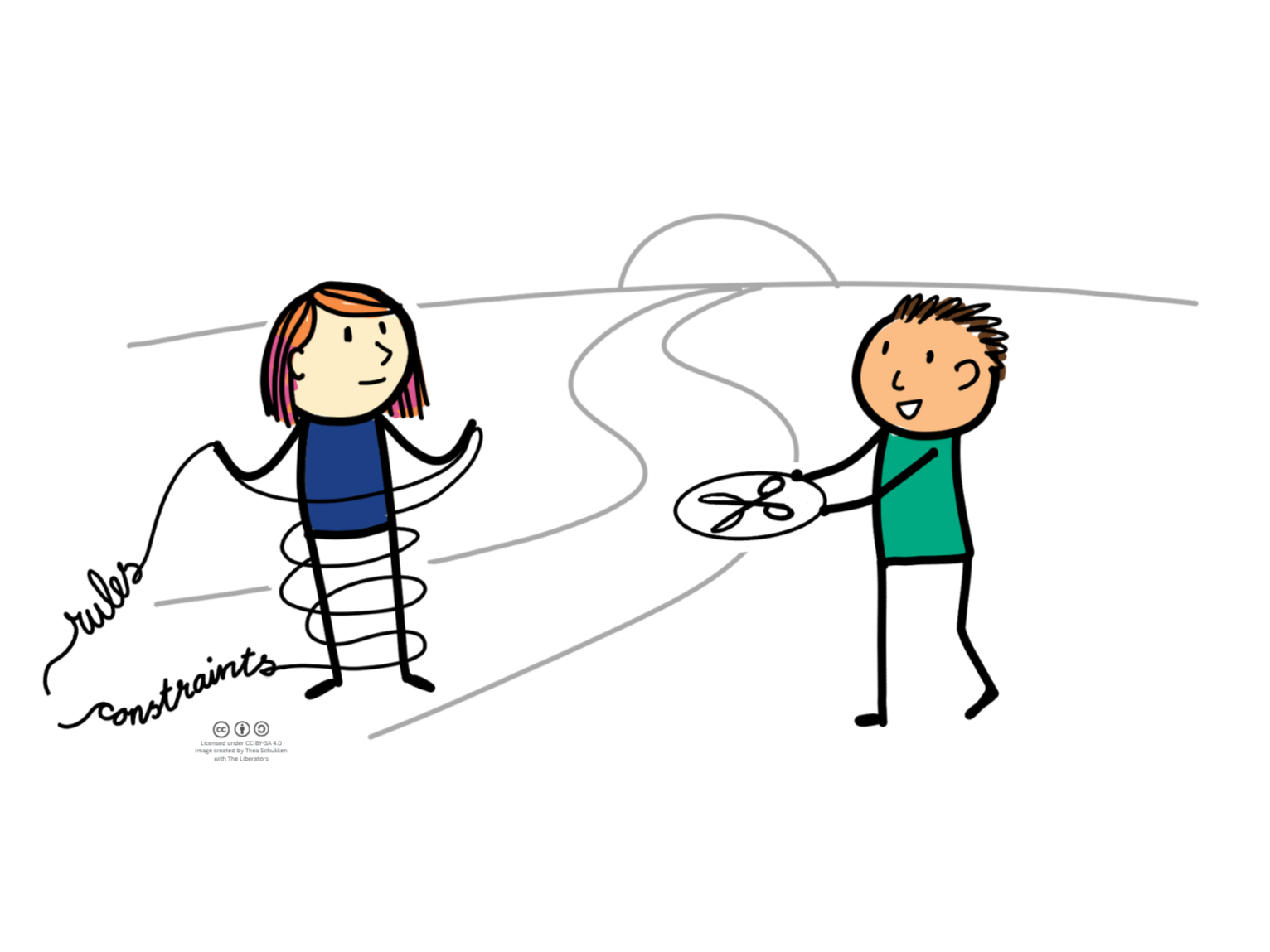
When trying LS for the first time, your safety lies in the structure itself. The rules—including the underlying microstructures—aren't restrictions; they are the foundation that supports creative adaptability. Read the structure through until you can visualize it, then follow the specifications.
The Key Point: Trust the constraints. Use a timer, keep explanations to a absolute minimum, and resist the urge to over-help or extend the minutes.
3. Find a Partner
You don’t have to host alone. Find a colleague, a friend, or a "guide on the side" who is curious and willing to give feedback. Observe them, plan together, and co-host your first session. Sharing the hosting load makes it safer to “fail forward” and twice as fun.
The Key Point: Collaboration builds confidence. Pay it forward by guiding someone else once you’ve found your footing.
4. Start with 1-2-4-All
The absolute best entry point for any group is 1-2-4-All [1-3-All for online] It takes just 12 minutes and guarantees that everyone is included, quieting the dominating personalities while giving introverts a voice.
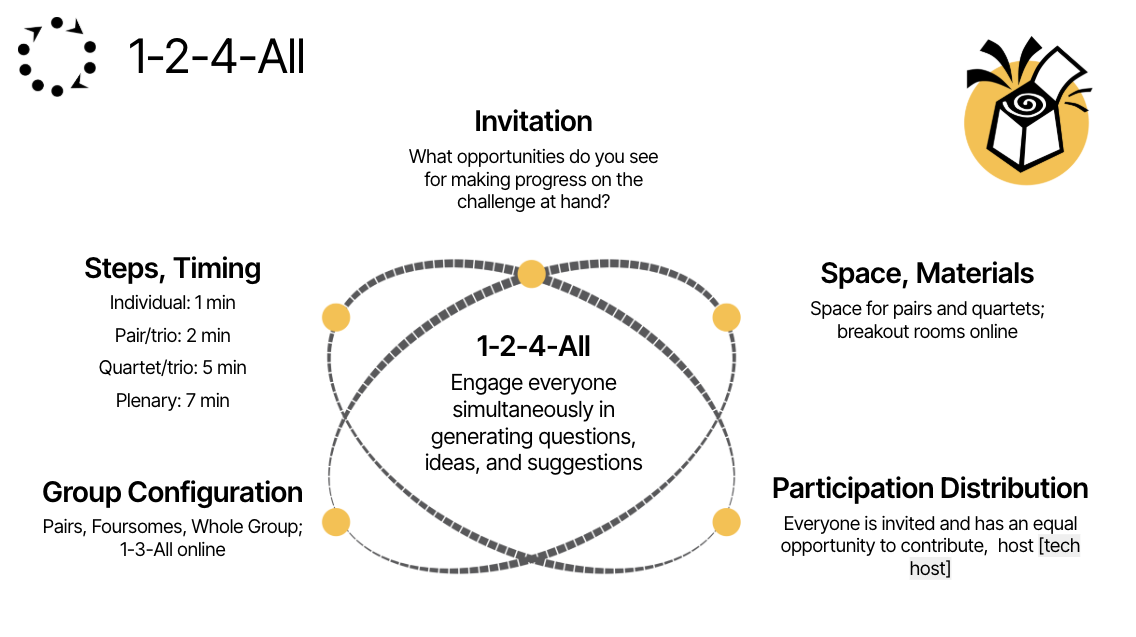
The Invitation: Pose a compelling question directly related to your group's challenge. It could be a problem or what seems like an insurmountable opportunity.
The Flow:
1 Minute: Silent individual reflection (write ideas down).
2 Minutes: Generate ideas in pairs.
4 Minutes: Notice patterns and insights in quartets.
5 Minutes: Ask the whole group, "What emerged from your conversation that everyone needs to hear?"
The Key Point: Skip the painful round-robin introductions or updates. Dive straight into a 1-2-4-All breakout to shift the energy of the room instantly.
6. Build from Quiet Successes
Don’t try to overhaul your groups's entire strategic planning process on day one. Start small. Tuck a 1-2-4-All into a routine meeting, a daily stand-up, or a brief coaching session. Let the immediate, visible results build everyone's appetite for more.
The Key Point: Success ripples outward. When people experience the energy of a group that truly "clicks," they will naturally ask you, "How did you do that?"
7. Next Steps
Once you’ve experienced your first quiet success, more doors will open.
Grow Your Repertoire: Add easy foundational structures like Impromptu Networking or Troika Consulting into your toolkit.
Explore: Head to Resources to find more materials to support your practice.