

Heard, Seen, Respected (HSR)
Practice Deeper Listening and Empathy with Colleagues (~30 min)
“Empathy removes the blocks to action in a way that is inclusive. It creates power through partnership and co-creation, resolving what appears to be knotted and bound.”
Purposes
In HSR, participants share and listen to each other’s stories of feeling unheard, unseen, and disrespected. By listening empathetically without judgment, groups build trust and learn to respond without over-promising or over-controlling. This practice helps participants notice unwanted patterns and shift toward more productive, compassionate interactions. It can offer catharsis and healing after strains in relationships. HSR brings to life LS Principle #3, Build Trust as You Go.
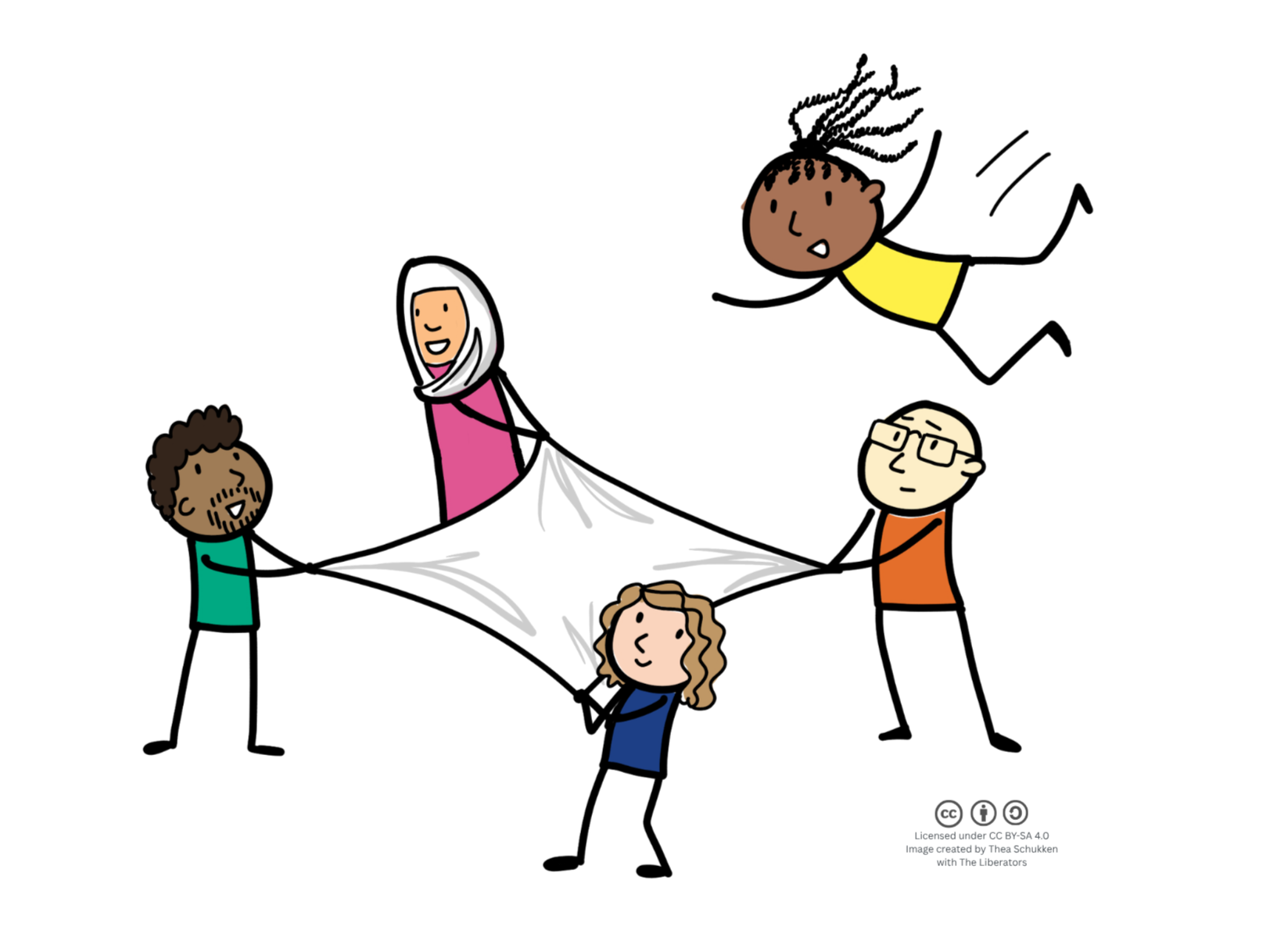
Principle: Build Trust as You Go
Five Structural Elements—Min Specs
Structuring Invitation
“The purpose of this activity is to practice listening without trying to fix anything or make any judgments. It can help us walk in another person’s shoes. I invite you to tell a story to a partner about a time when you felt you were not heard, seen, or respected.”
Space and Materials
Pairs of chairs facing each other. No tables. [Breakouts of two.] Introductory material to display.
Participation Distribution
Roles include host [tech host], storytellers, and listeners. Minimum group size is two. Everyone has an equal amount of time to take a turn as storyteller and listener
Group Configuration
Alone, pairs, quartets, whole group
Steps and Time Allocation
Intro: Share the structuring invitation. (1 min.)
Individual Reflection: Participants think of a story about a time they were not heard, seen, or respected that feels safe to share. (2 min.)
Storytelling in Pairs: Display Figure 5.23. Participants form pairs [breakouts]. Each person takes 5 minutes to share their story while their partner listens attentively, asking only, “What happened next?” If the speaker is done early, the pair sits in quiet, respectful silence. (10 min.)
Reflect in Pairs: Each person shares their experience of storytelling and listening, reflecting on what emotions and insights surfaced. (7 min.)
Reflect in Quartets: Pairs join to form quartets [Optional: Merge pairs to form quartets] to share their reflections and consider two questions: What patterns do the stories reveal? What importance do you assign to these patterns? (5 min.)
All-Together Sharing: Everyone returns to plenary. A few people reflect on where this practice of deep listening might be most valuable. (5 min.)
Heard, Seen, Respected
Introductory Material
Storytellers: Share a story of a time when you were NOT heard, seen, or respected. (There is no need to tell the hardest one!)
Listeners: Practice quiet presence, listening but not responding.
Together: Keep the stories confidential. Try to focus on describing the situation, not blaming the others. Share your experience as a listener and as a storyteller.

Heard, Seen, Respected Introductory Materials
Taking It Online
Groups can skip the reflection in quartets if combining breakout rooms is difficult. However, doing the full 1-2-4-All helps participants reflect on their experience. Tech hosts can prepare the quartet breakouts while participants are in pairs. Alternatively, use 1-3-All.
Practice Insights
Tips
Tell participants that the first story they think of is often the best one to tell. Make the activity feel safe by encouraging participants to protect each other’s privacy. Encourage listeners to notice when they form judgments or ideas about how to help and let them go.
Riffs and Variations
For groups with high trust, the word respected can be replaced with loved (referring to agape—seeking the highest good in others without motive for personal gain).
Practical Applications
Improve the quality of listening in meetings, help dysfunctional groups address interpersonal dynamics, or provide a forum for sharing grief during a difficult transition.
Optional String
String together with another LS that helps to mend relationships, such as Helping Heuristics, Generative Relationships STAR, or Appreciative Interviews.
Attribution
Liberating Structure developed by Henri Lipmanowicz and Keith McCandless. Inspired by His Holiness the Dalai Lama.
Collateral Materials
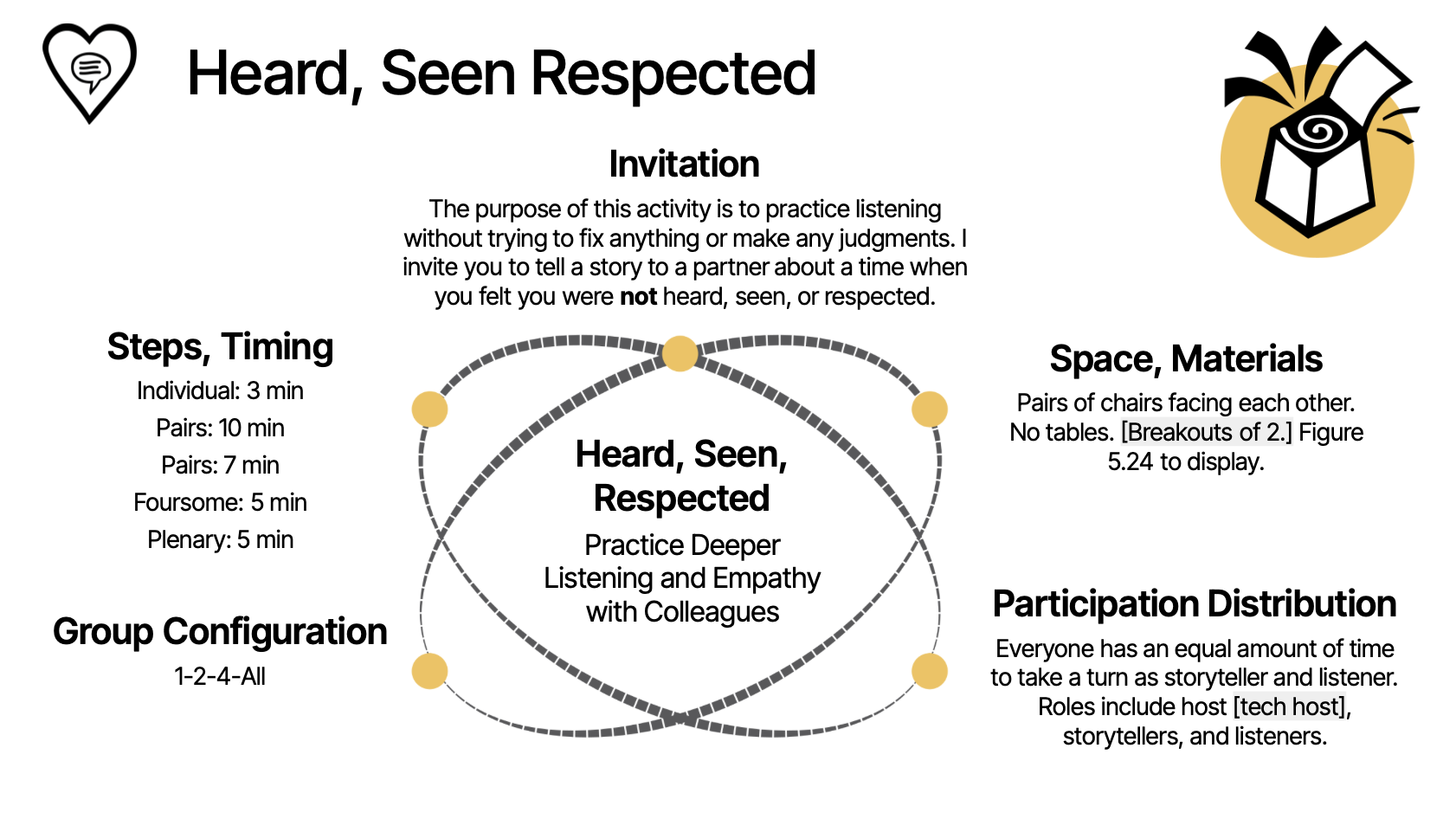
Link to supporting materials for Heard, Seen, Respected.
A one-slide overview of the elements of Heard, Seen, Respected in the LS constellation format.