
Liberating Structures
Liberating Structures (LS) are simple patterns that make it possible for individuals and groups to work together brilliantly. With a menu of 43+ open-source patterns, LS shift how people meet, plan, decide, and relate to one another, making it possible to include and engage many voices in shaping next steps and the future. Their minimal set of structural constraints help set groups free from conventional patterns that exclude, stifle, and over-control (like endless presentations, managed discussions, or unfocused brainstorming).
Groups consistently report that LS sessions feel different: more energized, more surprising, and more productive than expected.
“It can feel like magic when people bring their best to solving challenges and reveal aspects of themselves that colleagues have never seen before. But it’s not magic — it’s the intentional outcome of structured interactions that deepen connection, increase clarity, and generate new options.”
LS Across the Globe
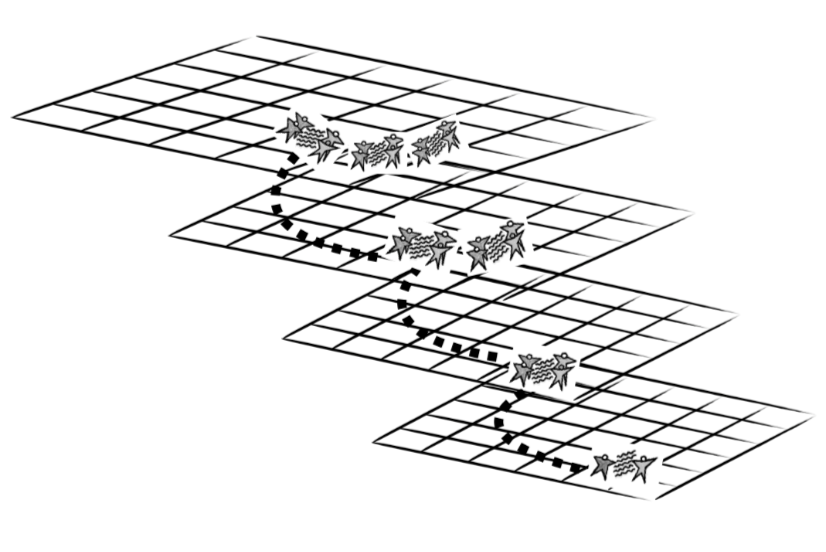
The growth of LS has been fueled by practitioners. Much like a self-organizing ecological system, LS has expanded through peer-to-peer learning, across boundaries and languages, driven by those putting the work into practice in their own domains. This spread mimics the underlying patterns of complex adaptive systems, where small, local actions lead to global shifts.
The LS community translated the foundational book, developed the mobile app, and creates vibrant spaces for mutual support.
By the Numbers:
7 Book Languages: The foundational LS book translated by field practitioners.
11 App Languages: The LS App (LiSA) available globally and used in over 160 countries.
110 Meetups & Community-Driven User Groups: Formed between 2014 and 2025.
Many LinkedIn and Slack Group Members: Exchanging insights.
Guiding Principles
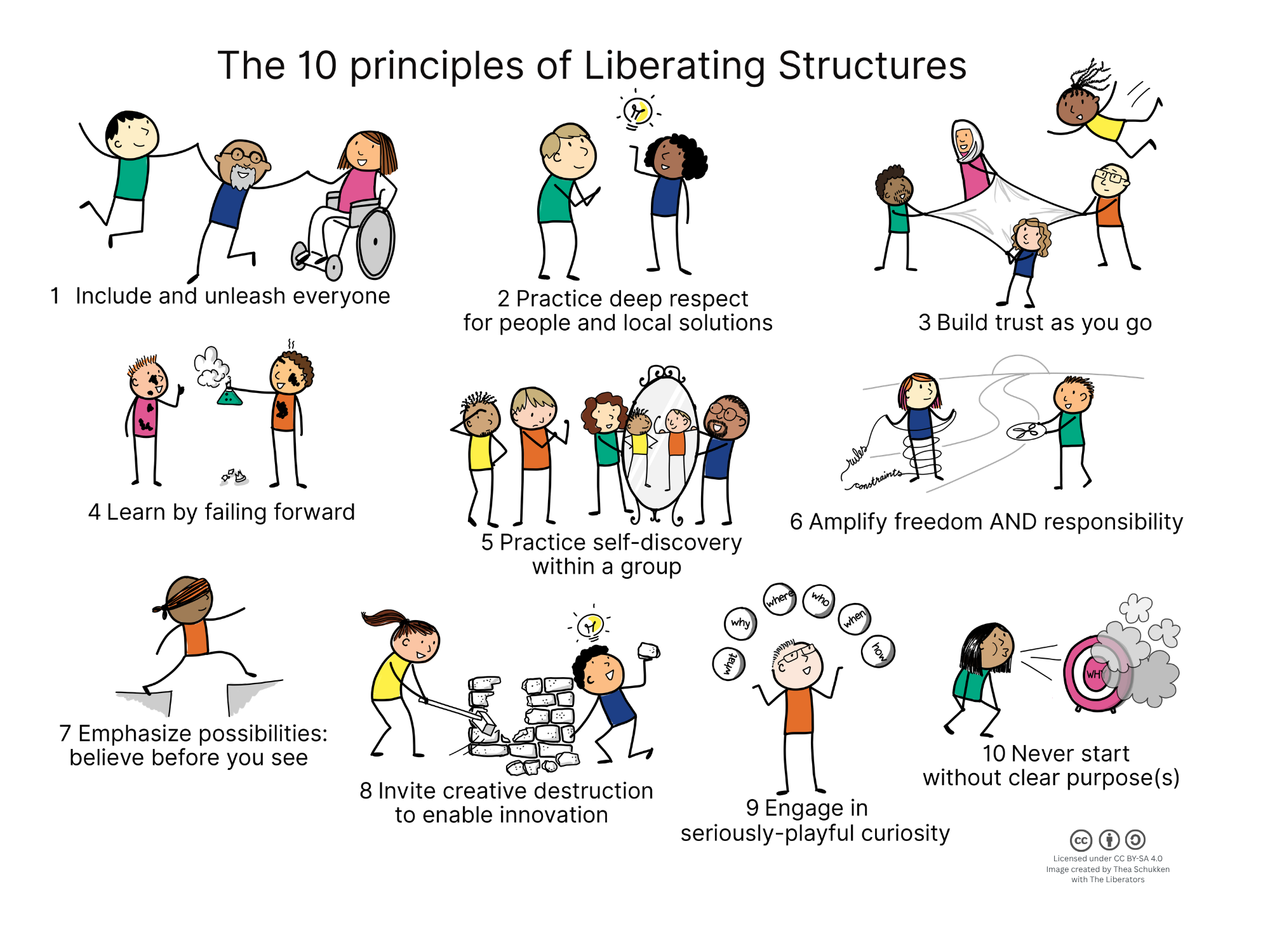
Each of the LS Principles and an associated figure created by Thea Schukken in partnership with The Liberators.
LS are rooted in guiding principles. All too often, there is a gap between what we say is important (our values or principles) and what we do (our everyday routines). This is where LS come in, providing a menu of practices to bridge the gap between purpose and practice.