

Appreciative Interviews
“I am done with great things and big plans, great institutions and big success.”
Discover and Build on the Root Causes of Success (~55–75 min.)
Purposes
In Appreciative Interviews, participants tell each other stories about how they successfully faced a challenge and identify what made them successful. In less than an hour, a group can identify the conditions essential for its success. This structure generates momentum and insights for positive change, and shows that social support is key to success. It brings to life LS Principle #5, Practice Self-Discovery Within a Group.
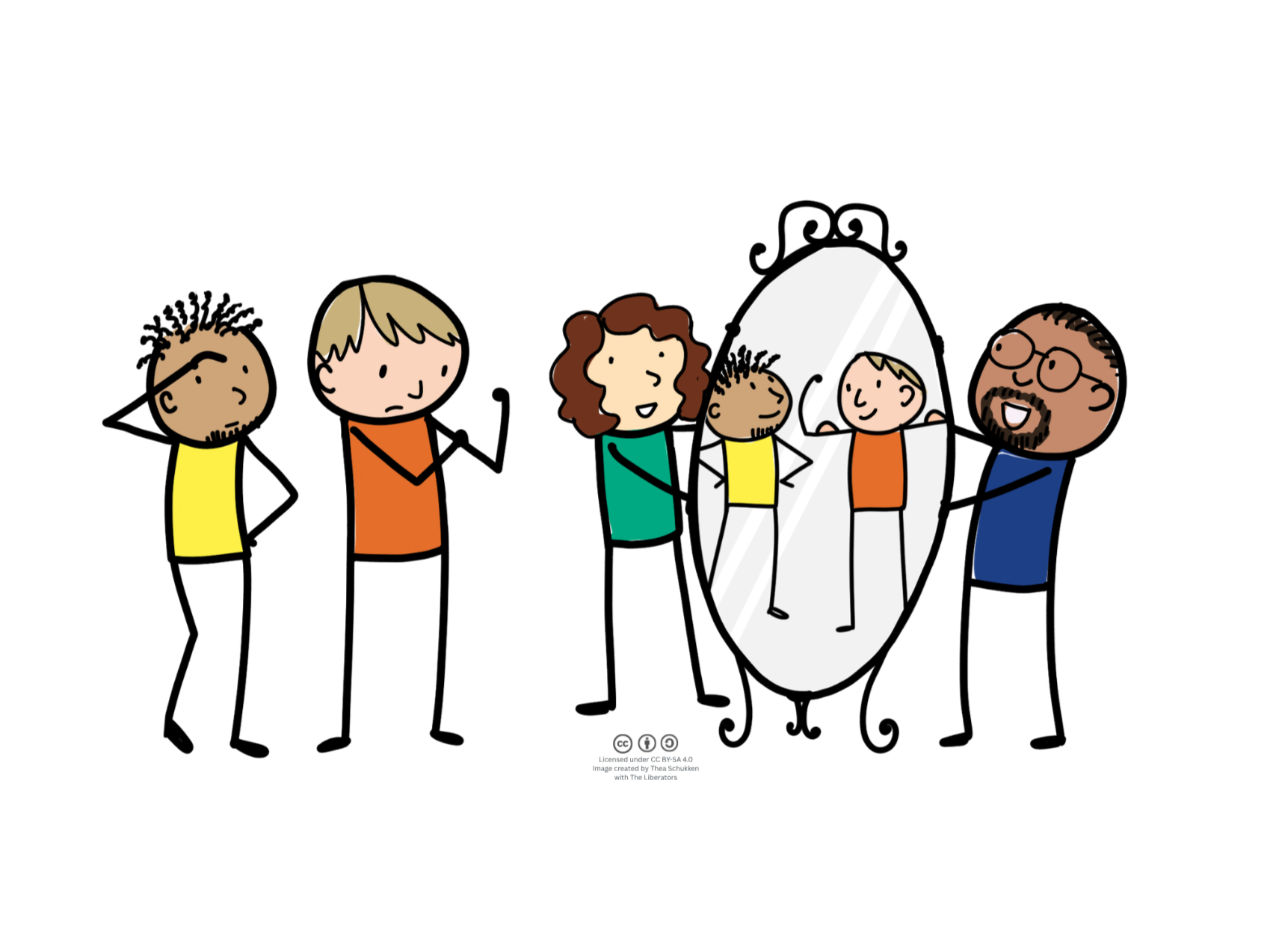
Principle: Practice Self-Discovery Within a Group
Five Structural Elements—Min Specs
Structuring Invitation
“Tell a story about a time when you worked on a challenge with others and were proud of what you accomplished. What made success possible?”
Space and Materials
Chairs for people to sit face to face in pairs, with no tables [breakouts of three]. Paper for everyone, flip charts for each group [chat or visual collaboration space].
Participation Distribution
Roles include host [tech host], interviewers, and interviewees. Minimum group size is two. Everyone has an equal opportunity to contribute.
Group Configuration
Pairs, quartets, whole group [trios, whole group]
Steps and Time Allocation
Intro: Share the structuring invitation. If this activity is linked to a project or theme, specify what kind of story participants should tell. Display the Structuring Invitation. (3 min.)
Storytelling: In pairs [breakouts of three], participants take turns interviewing and telling a success story, paying attention to what made the success possible, and taking notes. They may need to dig a little to identify conditions or assets that supported success. (7–10 min. each; 15–20 min. in pairs; 21–30 min. in trios)
Retelling (F2F only): Pairs join to form quartets. Each person retells their partner’s story. Everyone listens for patterns in conditions/assets that supported success and writes them down. (15 min.)
All-Together Sharing: Everyone returns to plenary. A few people share insights and patterns. Note key insights on a flip chart. (10–15 min.)
Dig Deeper: The group reflects on how to invest in the conditions that foster success. Ask: How are we investing in the assets and conditions that foster success? What opportunities do you see to do more? (10 min.)
Taking It Online
Use 1-3-All to save time and avoid having to combine groups.
Practice Insights
Tips
Encourage participants to notice judgments or ideas that arise while they listen and let them go. If participants tell stories about unsuccessful efforts, end the negativity by asking, “When have we succeeded, even in a modest way?” For F2F, sit knee-to-knee for the interview. Do not share your own experience when interviewing.
Riffs and Variations
Ask people to give a title to their partner’s story. Graphically record stories in a large space like a whiteboard. Publicize some of the most inspiring stories. Do a second round to find positive deviance (i.e., behaviors that enable some individuals to find better solutions to common problems than their peers without additional resources).
Practical Applications
Appreciative Interviews can be used in a human-centered design project to bring customer focus to life (“Tell a story about a time when you had a creative and positive interaction with a customer”), to revise college courses (“Tell a story about a time when a course or learning experience had a profound influence on your life”), or to look beyond a recent launch (“Tell a story about a first success in the field that can guide our strategy for the next two years”).
Optional String
Dive deeper into appreciation with Positive Gossip. Support making changes that build on conditions and assets with What I Need from You (WINFY) and Purpose-to-Practice.
Attribution
Liberating Structure developed by Henri Lipmanowicz and Keith McCandless. Dig deeper into the work of professor David Cooperrider and the social constructionist model.
Collateral Materials
Link to supporting materials for Appreciative Interviews.
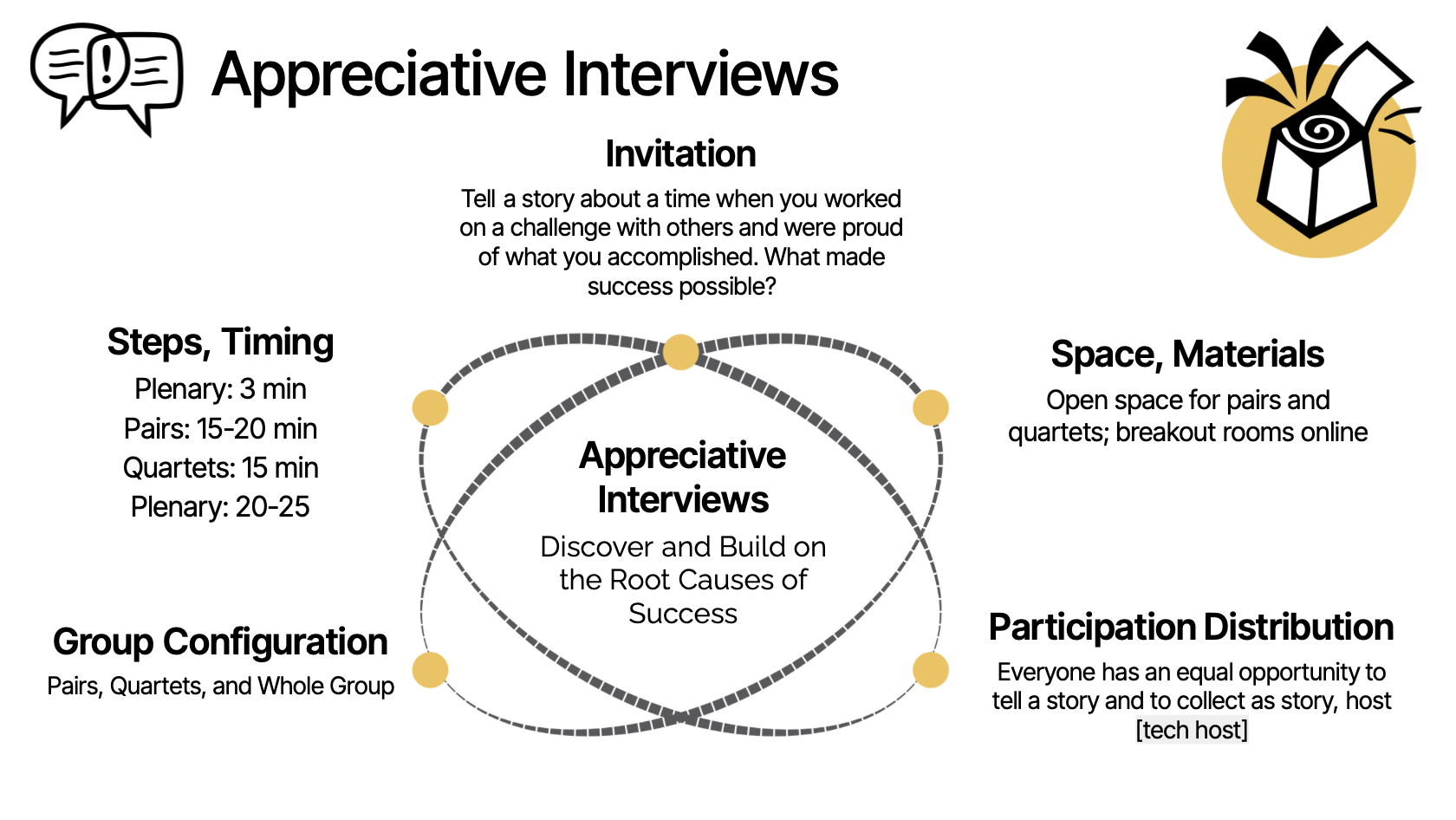
A one-slide overview of the elements of Appreciative Interviews in the LS constellation format.