

Principles Walk-Around
Hold a Mirror Up to Your Professed Values and Daily Habits (~25 min.)
“Perhaps what you measure is what you get. More likely, what you measure is all you’ll get.”
Purposes
In Principles Walk-Around, small groups form to reflect on the underlying principles of their work together. This bridges the gap between what we say is important (espoused principles) and what we actually do (routine habits). Principles Walk-Around is particularly useful in transitions, when it helps us ground our thinking while navigating uncertainties, untangling complexities, and facing emerging challenges. The Walk-Around embodies LS Principle #5, Practice Self-Discovery Within a Group.
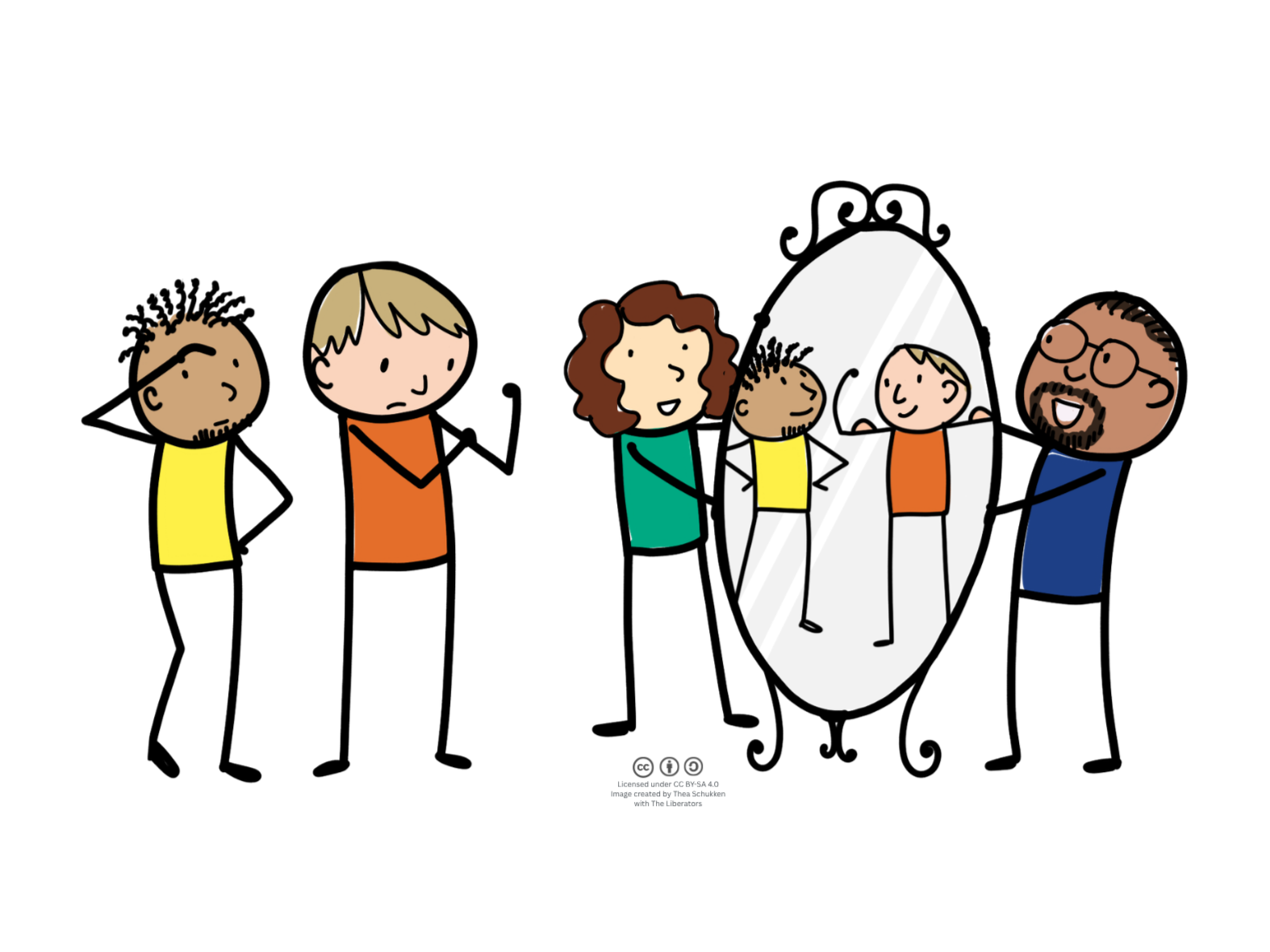
Principle: Practice Self-Discovery in a Group
Five Structural Elements—Min Specs
Structuring Invitation
“Let’s take a moment to reflect on how we’re working together. We’ll be checking in with ourselves to see if our day-to-day actions match up with the principles and values we say are important to us.”
Space and Materials
A space for small groups to form in one area of the room for each principle. The LS Principles illustration to display, LS Principles drawn or printed on separate pages (see online resources), sticky notes. [Digital version of LS Principles illustration, digital sticky notes, numbered breakouts for each principle.]
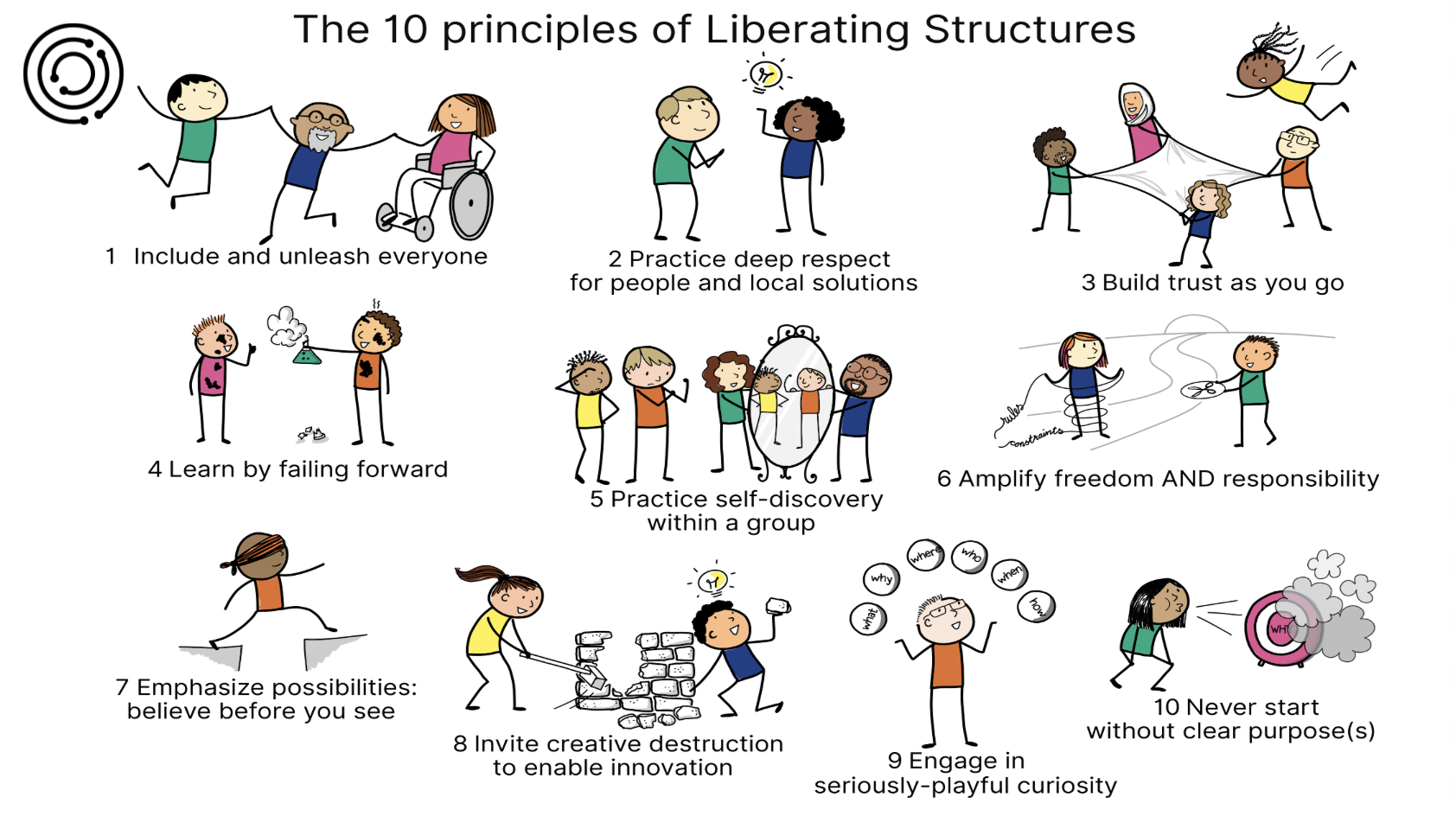
LS Principles for Principles Walk-Around. Illustration: Thea Schukken.
Participation Distribution
Roles include host [tech host] and participants. Minimum group size is ten. Everyone is invited and has an equal opportunity to contribute.
Group Configuration
Alone, small groups, whole group.
Steps and Time Allocation
Intro: Share the structuring invitation. (1 min.)
Individual Reflection: Participants quietly read through and reflect on the LS Principles using the illustrated LS Principles sheet. (4 min.)
Instructions: Explain the process. In three rounds, the host asks a different question and participants walk to the principle that speaks to them most [go to the corresponding breakout room]. They discuss their chosen principle with one other person [everyone in the breakout; use chat for a large group] and leave a sticky note explaining why that principle fits for them. [If you can’t allow self-selection of breakouts, assign participants randomly to breakouts of four and have each person share which principle they selected and why.] (1 min.)
Principles Walk-Around: Participants engage in three rounds, return to plenary between rounds, each with a different question (4 min. per round, 12 min. total).
What’s the most important principle for you? Why?
Which principle have you really leaned into over the past year? Why?
Which principle needs extra care and attention right now? Why?
Small-Group Debrief: Participants stay with their current partner and form groups with others around them to debrief on what stood out to them. [Broadcast a message asking participants to debrief in their current breakout rooms.] (3 min.)
Collect Insights and Next Steps: Everyone returns to plenary. A few people share their big “aha!” moments and ideas for action. (5 min.)
Taking It Online
This works online with no major adjustments.
Practice Insights
Tips
If too many people gather around one principle, break them into smaller groups. [In a breakout with more than four people, participants can use the chat before talking.] Let participants define how the principles relate to their local context. Be prepared for emotional responses to the principles.
Riffs and Variations
Repeat this structure regularly during a transition to check progress and creatively adapt. Can be used to reveal insights that surveys and other quantitative assessments might have missed. Use any set of principles that point to specific, valued behaviors. Adjust prompts based on the context. For example, for a new policy, ask (1) What part is most critical? (2) What part seems risky? (3) What part needs more local interpretation?
Practical Applications
Help a group evaluate their experience with an initiative, make sense of a cultural transition, or find balance in remote working arrangements.
String with Wicked Questions to draw out more creative and adaptable tension. String with Troika Consulting and 15% Solutions to shape next steps and the resolve to try a new behavior.
Optional String
Attribution
Developed by Fisher Qua and Keith McCandless with Seattle LS User Group.
Collateral Materials
Link to supporting materials for Principles Walk-Around.
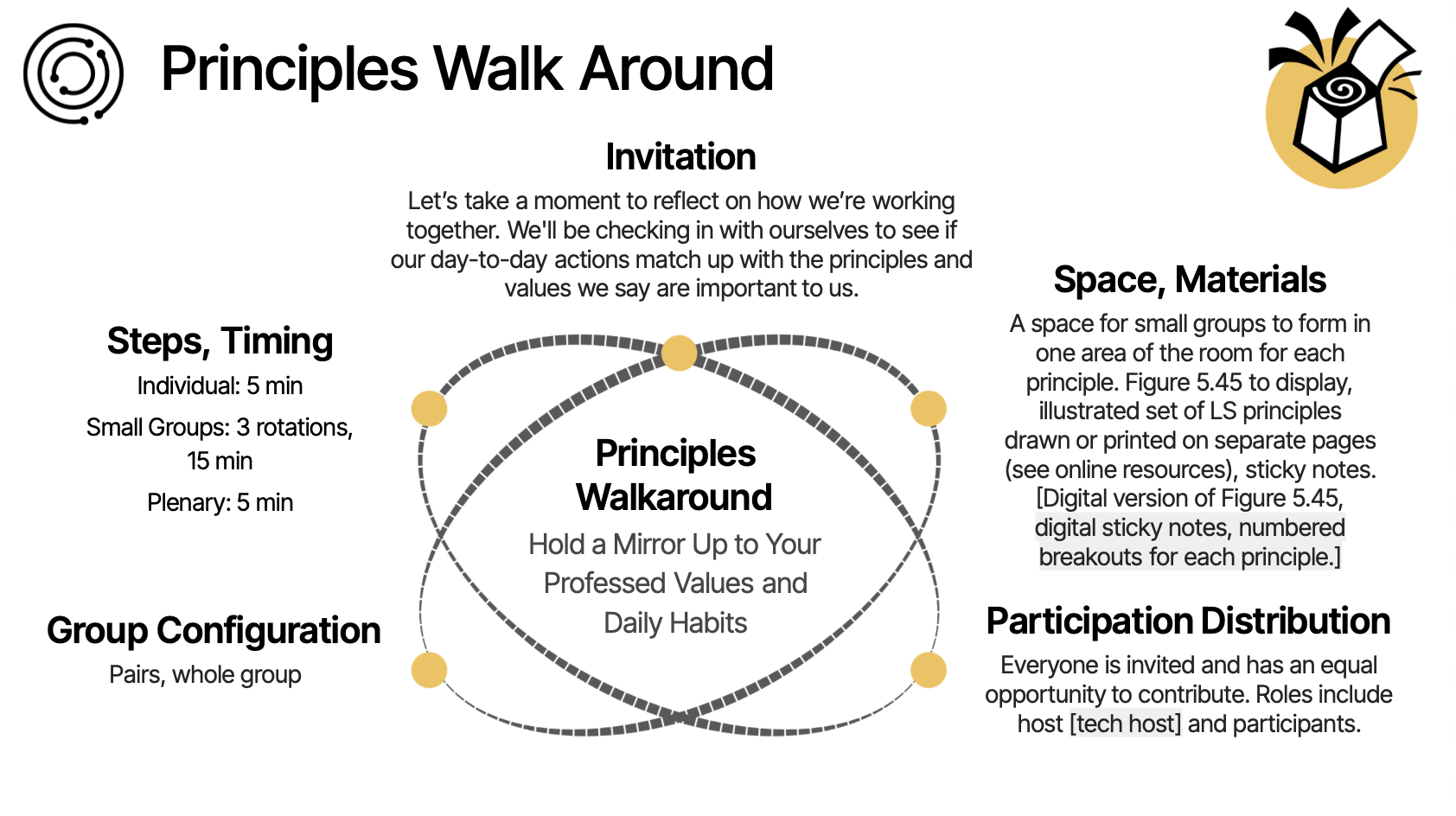
A one-slide overview of the elements of Principles Walk-Around in the LS constellation format.