

Folding Spectrogram
Recognize Genuine Differences and Similarities on the Way to Deciding (~15–20 min.)
“It is not our differences that divide us. It is our inability to recognize, accept, and celebrate those differences.”
Purposes
Folding Spectrogram allows a group to visually and physically represent their perspectives on a challenge by positioning themselves along a line. This structure reveals similarities and differences in perspectives, promoting curiosity while revealing issues that impact our decisions. The activity explores a healthy landscape of diverse perspectives and helps to avoid surprises or traps in the decision-making process. Folding Spectrogram enacts LS Principle #5, Practice Self-Discovery Within a Group.
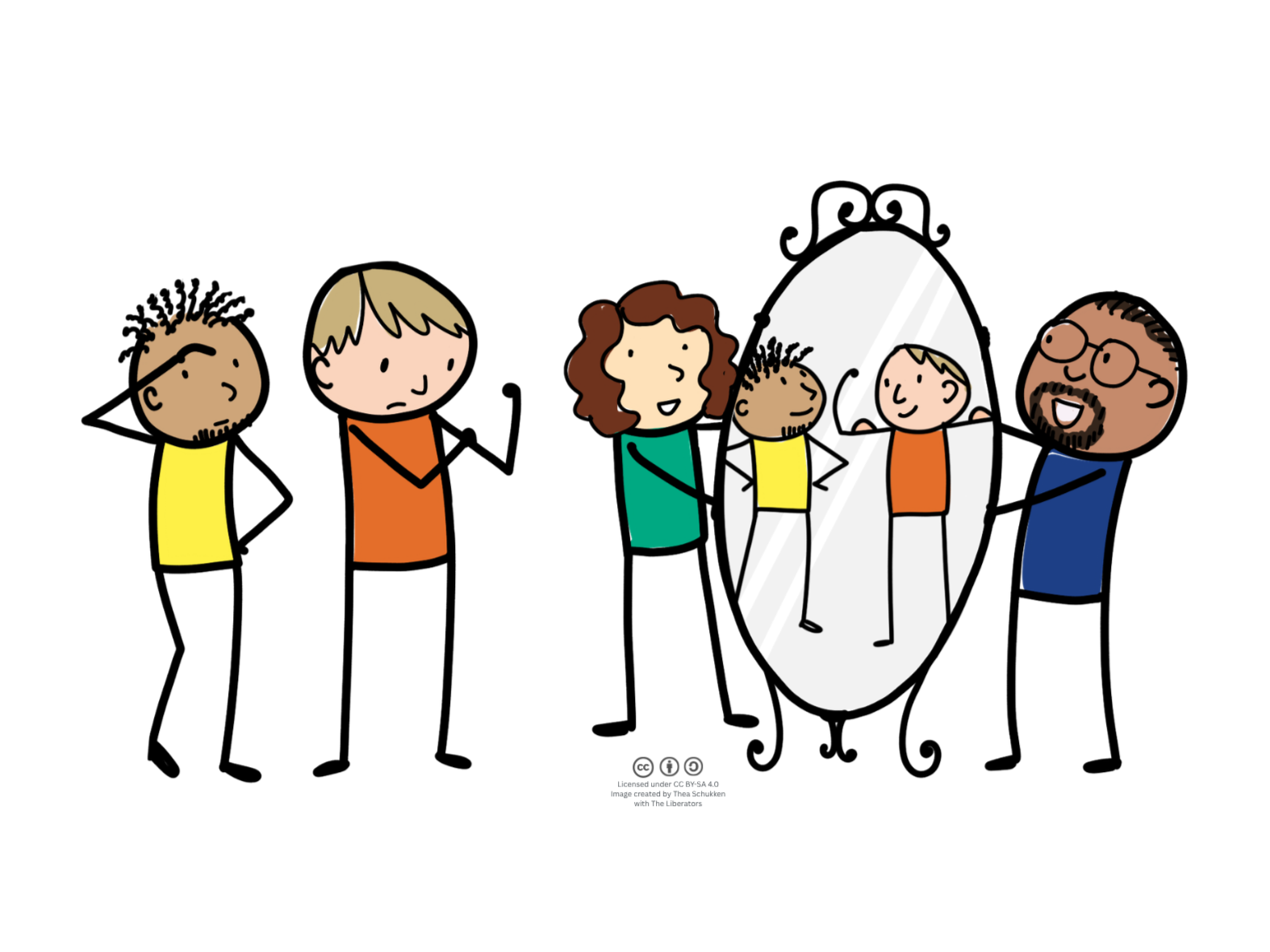
Principle: Practice Self Discovery in a Group.
Five Structural Elements—Min Specs
Structuring Invitation
“Let’s do a quick activity that will get us thinking and connecting around how we respond to an issue we’re facing.”
Space and Materials
An open space large enough for everyone to stand in for a long line. [Visual collaboration space showing a horizontal line with labeled endpoints. Dots or sticky notes for each person to place along the line.] A microphone for large groups. Prepared statement(s) that allow a range of responses (not just “yes” or “no”).
Participation Distribution
Roles include host [tech host] and participants. Minimum group size is ten. Everyone is invited and has an equal opportunity to participate.
Group Configuration
Alone, whole group.
Steps and Time Allocation
Intro: Share the structuring invitation and identify the issue you will explore together. (1 min.)
Setup: Everyone moves near the line on the floor [in the digital space]. Explain that each end of the line represents an extreme perspective and the space in the middle is for in-between perspectives. Optional: Share a statement like “Chocolate is essential in my life,” identify the extreme endpoints, and have people imagine where they would go on the line. (2–4 min.)
Respond to Statement: Offer a statement and invite participants to move to their position on the line. [Invite everyone to put a mark where they would “stand” on the line.] (2 min.)
Look Around: Participants notice where others are positioned [in the chat]. (2 min.)
Share: A few participants from different parts of the line share their perspective with the whole group. [Aloud and/or in the chat.] (4 min.)
Fold Option (F2F only): If there are a lot of differences along the line and the group needs a deeper level of understanding, proceed with the Fold Option (show below): Participants fold the line in half so everyone is face to face with someone who has a different perspective. They take three minutes to discuss their perspectives. With larger groups, participants can fold the line again and form quartets for another three minutes. (4–8 min.)
More Statements: Repeat steps for up to three to five more statements. (24–40 min.)
Debrief: Everyone returns to plenary. A few people reflect on what they learned and how it informs next steps. (3 min.)
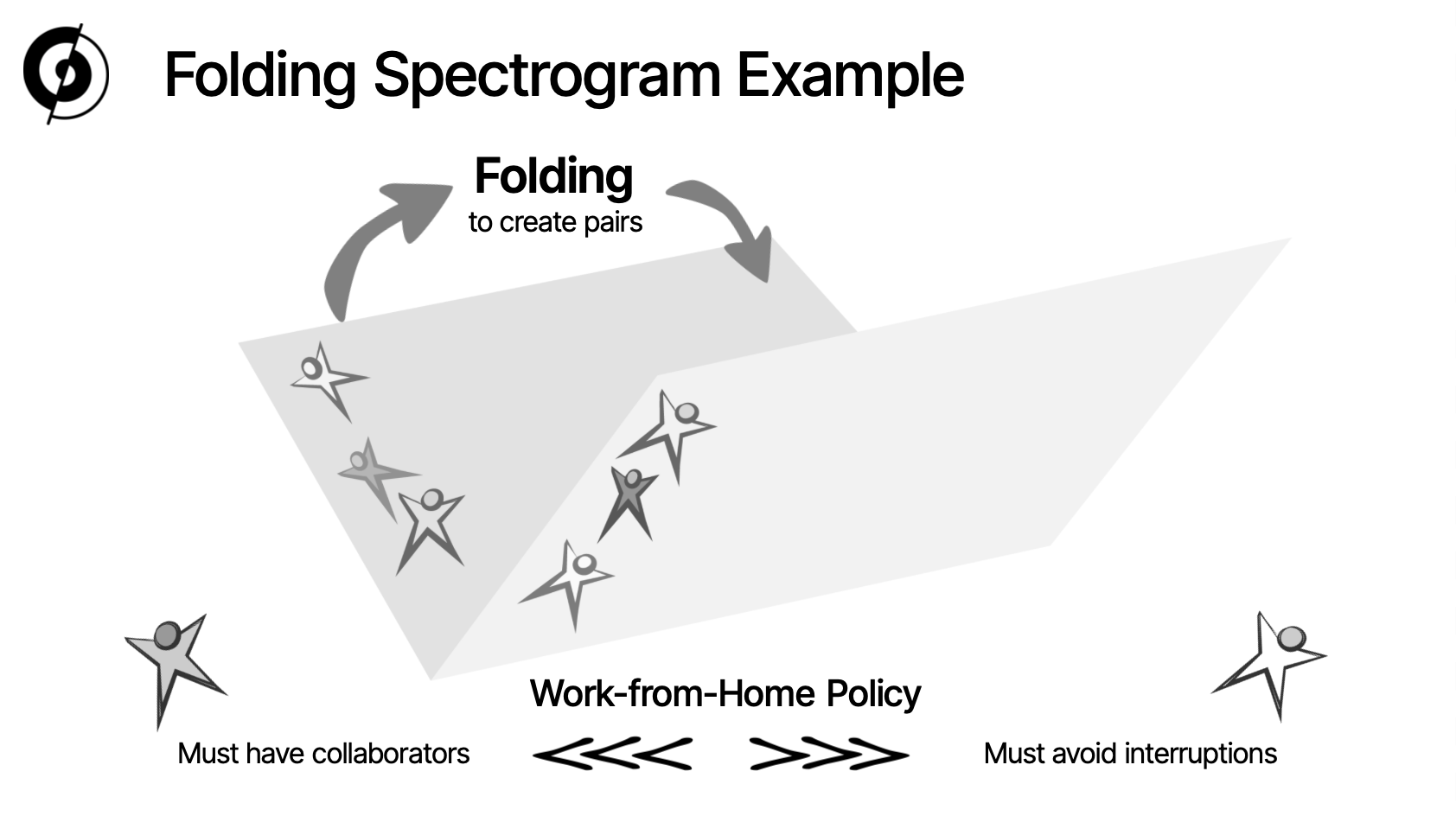
A Folding Spectrogram example. People on opposite ends are paired by folding the line at the center.
Taking It Online
Online, this structure lacks the physical movement and participants miss the chance to observe how other people respond to the challenge or issue. Skip the “Fold” step online.
Practice Insights
Tips
Develop statements that get to the heart of the challenge. Start with statements that are easy to respond to and move to more difficult or ambiguous ones. Shorter rounds are better than longer. Repeat structure to go deeper. Debriefs become more important as statements become more complex.
Practical Applications
When a group feels stuck or divided into camps, do a quick round to humanize people by showing their similarities and differences. In a F2F setting, when a discussion gets sidetracked, help the group refocus through physical activity that reveals people’s positions.
Optional String
Follow up on identified tensions and challenges with Critical Uncertainties or Wicked Questions to explore risks and opportunities. If the challenge you started with now looks different, string together with Agreement and Certainty to better understand the decisions ahead.
Attribution
Variations have been used for many years. Adapted by Nancy White and other LS practitioners.
Collateral Materials
Link to supporting materials for Folding Spectrogram.
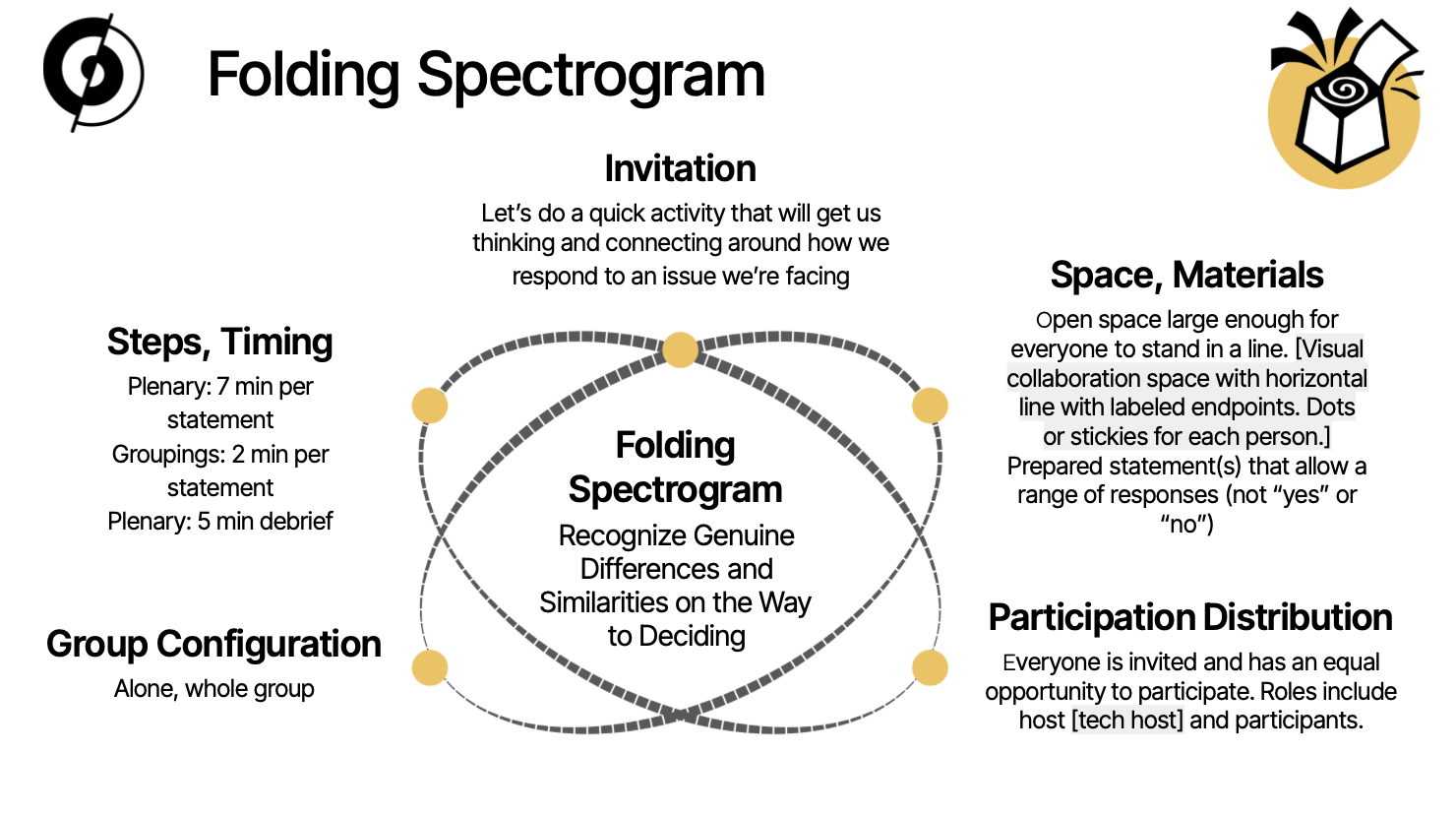
A one-slide overview of the elements of Folding Spectrogram in the LS constellation format.