

Shift & Share
Spread Good Ideas and Make Informal Connections with Innovators (~70–90 min.)
“Never change things by fighting the existing reality. To change something, build a new model that makes the existing model obsolete.”
Purposes
In Shift & Share, a few people set up stations to share an idea or innovation. Small groups of audience members rotate through the stations, asking questions and giving feedback. This structure surfaces useful ideas hidden within a group. Through repeated interactions, presenters can refine their concepts while the group discovers opportunities for collaboration. This structure brings to life LS Principle #9, Engage in Seriously Playful Curiosity.
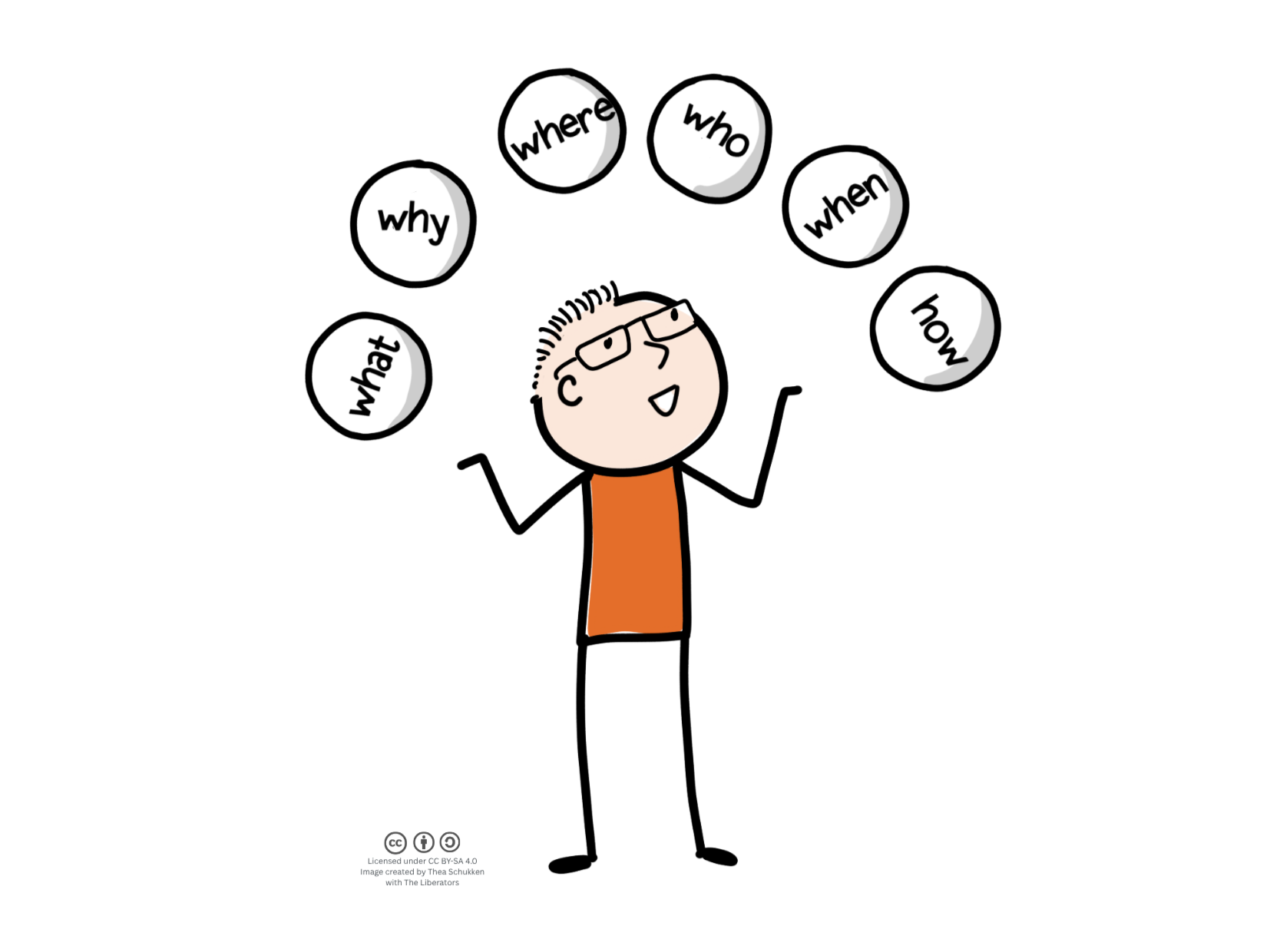
Principle: Engage in Seriously Playful Curiosity.
Five Structural Elements—Min Specs
Structuring Invitation
“Let’s shake things up and uncover innovations within our group! Forget those long, drawn-out presentations. Instead, we’ll start a whirlwind tour of new options and projects, like speed dating, to learn about new ideas and practices.”
Space and Materials
A large space with five to eight stations set up far enough apart to minimize noise [breakout rooms]. Chairs for small groups at each station. Space for presenters to display visuals [screen sharing enabled or visual collaboration space]. See instruction details below to display.
Participation Distribution
Roles include host [tech host], presenters, and audience members. Minimum group size is ten. Everyone is invited and has an equal opportunity to contribute.
Group Configuration
Small groups, whole group. Presenters set up their own stations. [Tech host sets up breakout rooms. Number breakout rooms so presenters can move through them in order.] The audience divides into small groups, one per presenter.
Steps and Time Allocation
Intro: Share the structuring invitation. (1 min.)
Instructions: Identify the presenters and divide the audience into small groups, one per presenter. Show the Shift and Share Steps (see below) and explain the process. Each presenter will talk for five to seven minutes, and the audience will have three to four minutes to ask questions and share feedback. Then the audience will have one minute to rotate to the next station. [Online, small groups stay in their breakout rooms and presenters rotate.] (1 min.)
Sharing Stations: Small groups go to their first station [breakout room], where the presenter conducts their session. Signal when it is time for the audience to ask questions, and again when it is time to rotate. The audience [presenters] rotate to the next station and repeat the process. (9–12 min. per round, up to 7 rounds)
All-Together Sharing: Everyone returns to plenary. A few participants share an idea that inspired them. (2 min.)
Taking It Online
This works online with no major adjustments except that presenters rotate to new breakout rooms instead of the audience moving. A short break halfway through a long session is recommended.
Practice Insights
Tips
Give sufficient space between groups (or provide separate spaces) to enable people to hear. Keep tightly to the schedule. Encourage presenters to practice keeping within the time limit.
Riffs and Variations
Shorten presentation times to increase everyone’s energy level and/or lengthen the Q&A to increase feedback to presenters. In F2F settings, encourage people to go to the stations they are most curious about rather than assigning groups.
Practical Applications
Shift and Share can orient new members of a research consortium to innovations within the broader community, introduce new technology applications at a conference, or highlight programs and people from both sides of a newly merged organization.
Optional String
Refine new ideas with Troika Consulting and Purpose-to-Practice.
Attribution
Liberating Structure developed by Henri Lipmanowicz and Keith McCandless.
Collateral Materials
Shift & Share Steps
Intro – Share the structuring invitation. (1 min.)
Instructions – Identify the presenters and divide the audience into small groups, one per presenter. Show the Shift & Share Steps and explain the process. Each presenter will talk for five to seven minutes, and the audience will have three to four minutes to ask questions and share feedback. Then the audience will have one minute to rotate to the next station. [Online, small groups stay in their breakout rooms and presenters rotate.] (1 min.)
Sharing Stations – Small groups go to their first station [breakout room], where the presenter conducts their session. Signal when it is time for the audience to ask questions, and again when it is time to rotate. The audience [presenters] rotate to the next station and repeat the process. (9–12 min. per round, up to 7 rounds)
All-Together Sharing – Everyone returns to plenary. A few participants share an idea that inspired them. (2 min.)
Link to supporting materials for Shift & Share.

Sample Slide for Shift & Share Steps
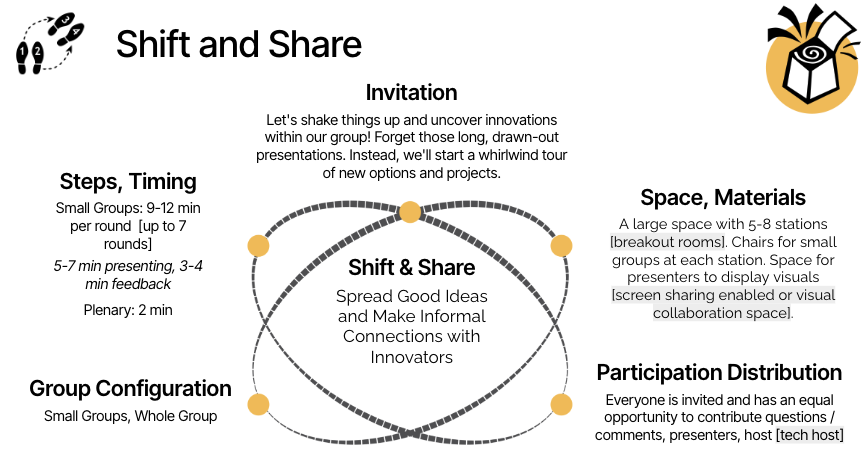
A one-slide overview of the elements of Shift & Share in the LS constellation format.