

Min Specs
Specify Only the Absolute Must Dos and Must Not Dos for Achieving a Purpose (~40–50 min.)
“A designer knows perfection is achieved not when there is nothing more to add but when there is nothing more that can be taken away.”
Purposes
In Min Specs, participants generate a list of all potential dos and don’ts for achieving a purpose and then reduce it to the absolute minimum requirements. By eliminating nonessential rules (max specs), Min Specs gives groups more freedom and promotes responsibility. It can also help a group scale up innovations with fidelity. This structure gives life to LS Principle #6, Amplify Freedom and Responsibility.
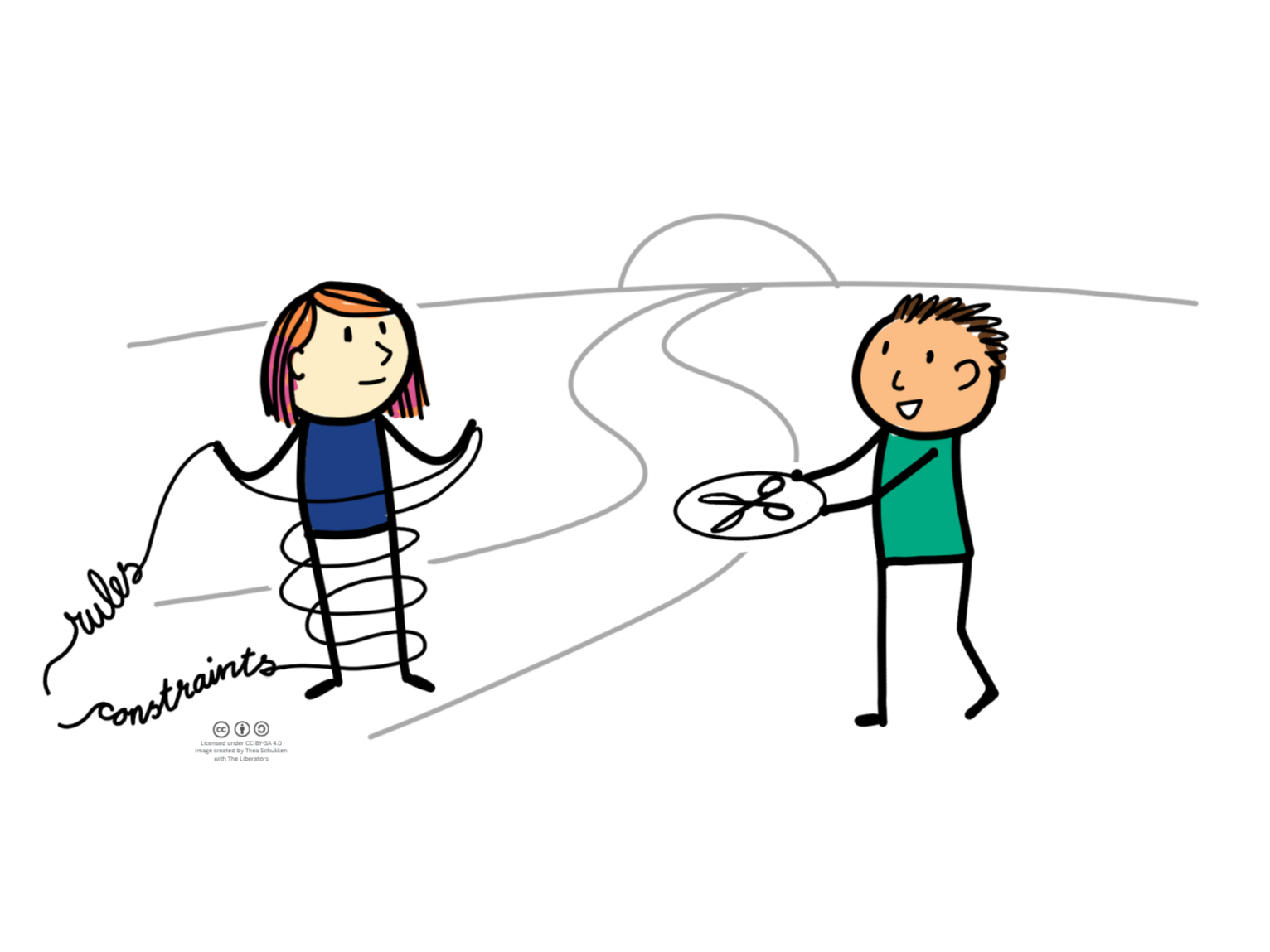
Principle: Amplify Freedom and Responsibility
Five Structural Elements—Min Specs
Structuring Invitation
“Based on our direct experience in the field, we will eliminate the clutter of nonessential rules and requirements and determine which rules are truly necessary to achieve our purpose.”
Space and Materials
Groups of four to seven chairs around small tables. Paper for each participant [optional: visual collaboration space].
Participation Distribution
Roles include host [tech host] and participants. Minimum group size is four. Everyone is invited and has an equal opportunity to contribute.
Group Configuration
Alone, small groups of four to seven, whole group.
Steps and Time Allocation
Intro: Share the structuring invitation and identify a shared purpose for responding to a challenge or new initiative, beginning with “we want . . . .” (1 min.)
Generate Max Specs: Participants list everything they must do or must not do to achieve the shared purpose. These are the “max specs.” (1 min.)
Form Groups and Combine Lists: In groups of four to five [breakouts], participants combine their lists, being as detailed as possible. (6 min.)
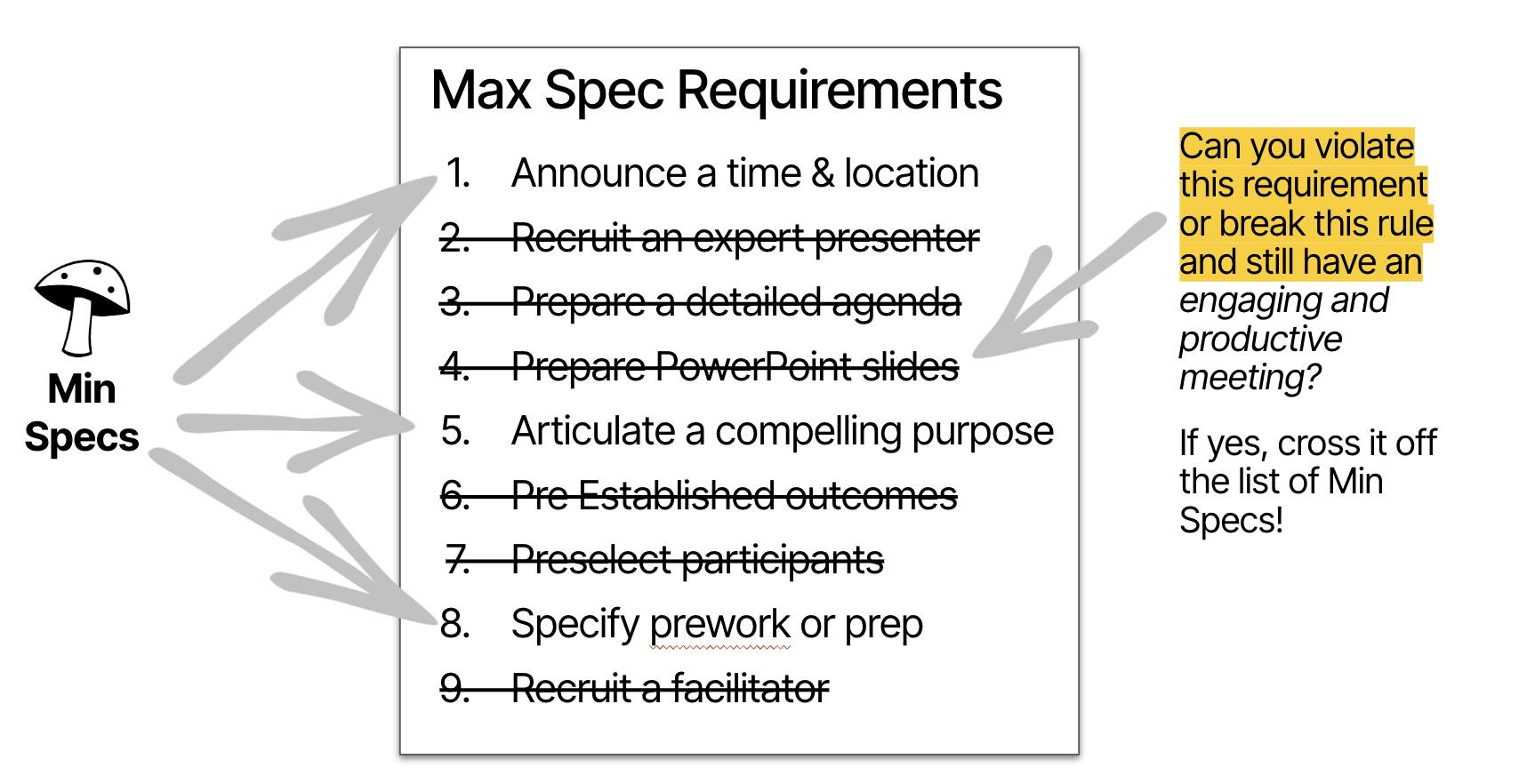
Evaluate Max Specs: Everyone returns to plenary for instructions and then goes back to their groups [same breakout rooms]. Participants consider each max spec in relation to the shared purpose and cross off anything they can that doesn’t achieve the purpose (see under Collateral Materials for an example). (15 min.)
Reevaluation (Optional): Everyone returns to plenary for instructions. The groups go through their lists one more time, looking for any more rules they can eliminate. (10 min.)
Reduce Lists to Min Specs: Everyone returns to plenary. Each group shares its short list. As they share, consolidate the lists into the final list of inviolable min specs. (15 min.)
Reflection on First Steps: Participants share ideas about first steps for achieving the shared purpose while putting the min specs into practice. (2 min.)
Taking It Online
Min Specs works online with no major adjustments. You can use the chat function to evaluate max specs.
Practice Insights
Tips
A clear purpose is essential for evaluating the max specs. Be ruthless about dropping max specs and praise groups that drop many. Include as many stakeholders as possible and listen to direct experience from the field about what is truly essential or nonessential.
Riffs and Variations
Do a second round of purpose testing, asking, “If you followed all the min specs except this one, could you achieve your purpose?” (If yes, drop that spec.) Create min specs for the future rather than the present. Make the min specs official and live by them as inviolable rules.
Practical Applications
Min Specs can align stakeholders around a complex problem, support a major transition, or help a design team identify features to develop and prototype.
Optional String
Follow up with Creative Destruction if people are reluctant to let go of max specs.
Attribution
Liberating Structure developed by Henri Lipmanowicz and Keith McCandless. Dig deeper by exploring the work of Paul Plsek, Brenda Zimmerman, and the Plexus Institute.
Collateral Materials
Link to supporting materials for Min Specs.
Min Specs Example Application: from maximum to minimum specifications.
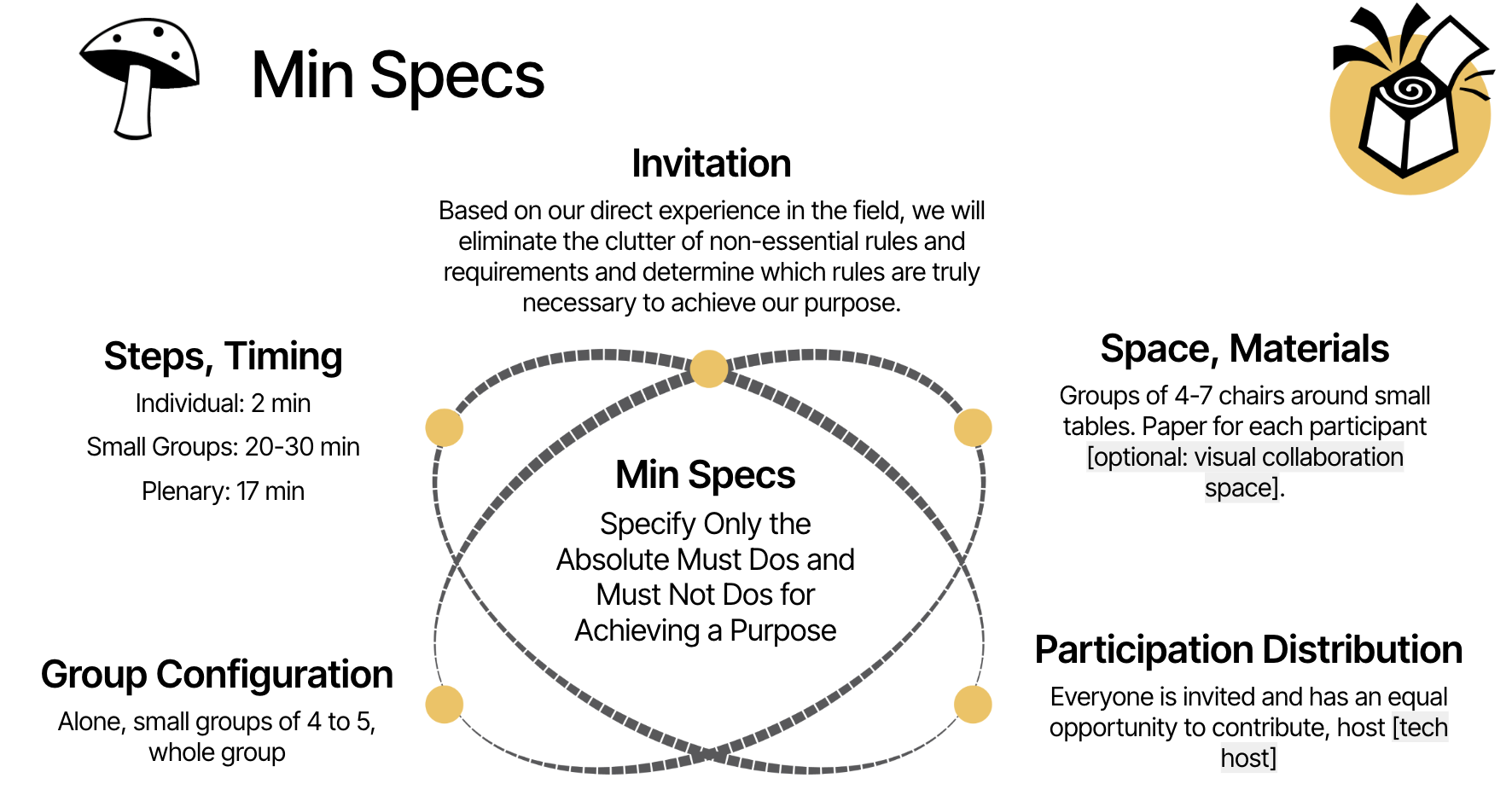
Microstructural elements of Min Specs in the constellation format.