

What I Need from You (WINFY)
Surface Needs and Work Across Functions and Disciplines
“The range of what we think and do is limited by what we fail to notice.”
Purposes
In WINFY, participants from different functional groups directly express what they need from each other to succeed. Through clear requests and responses, groups learn to balance individual needs against higher-order goals. This open communication breaks down barriers and builds stronger collaboration across functions. It can also mend broken connections and build trust. This structure enacts LS Principle #6, Amplify Freedom and Responsibility.
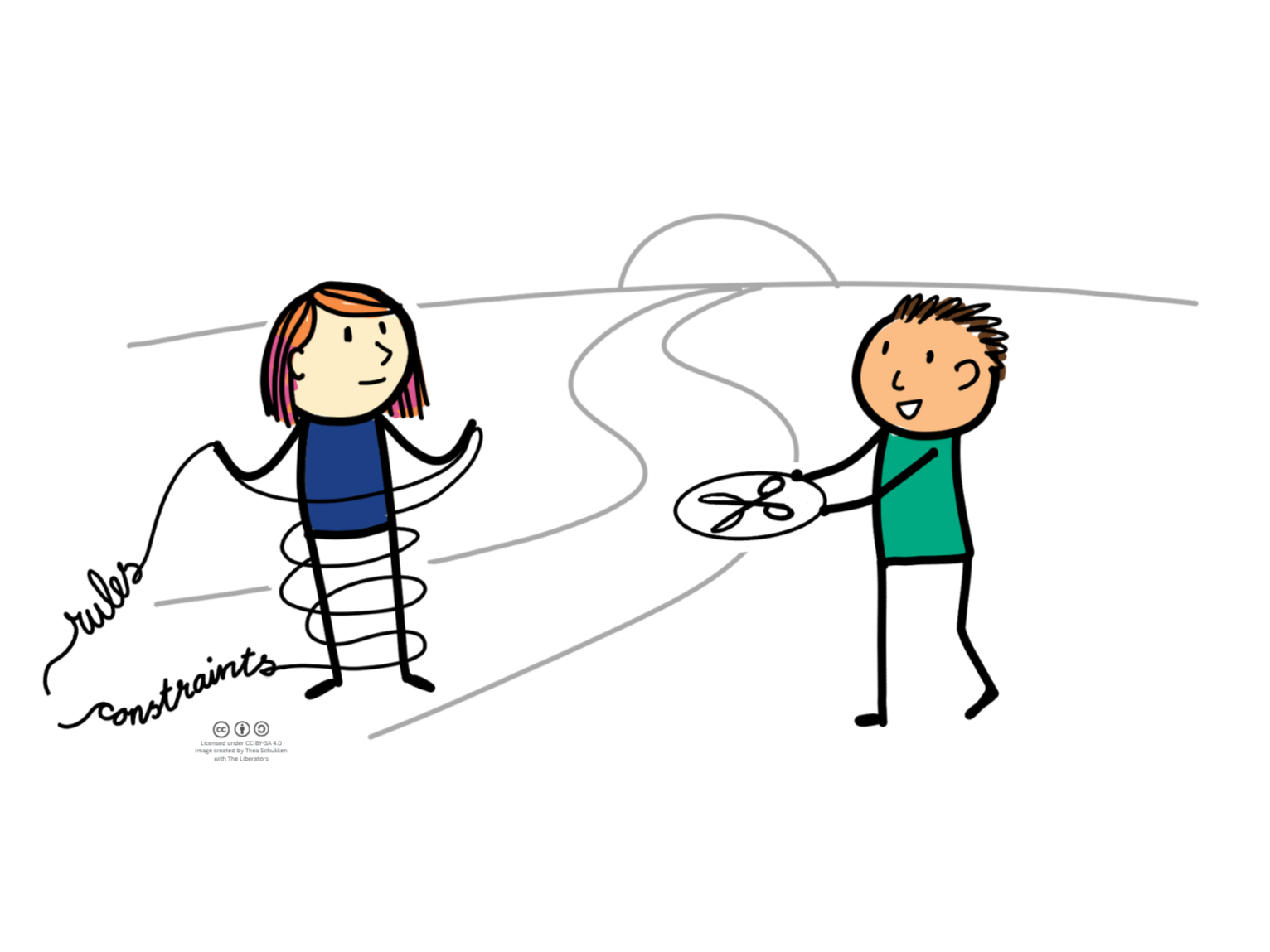
Principle: Amplify Freedom and Responsibility
Five Structural Elements—Min Specs
Structuring Invitation
“It’s time to simplify our collaborative pattern. Working in functional groups, you are going to identify what you need to achieve your goals and make direct requests to your colleagues from other functions. Everyone will also practice giving clear responses to requests.”
Space and Materials
A large room for three to seven functional groups [breakouts]. A chair for each group spokesperson to sit in a circle in the middle of the room [spotlight]. Display room configuration (below). Sticky notes and pens. [Visual collaboration space.]
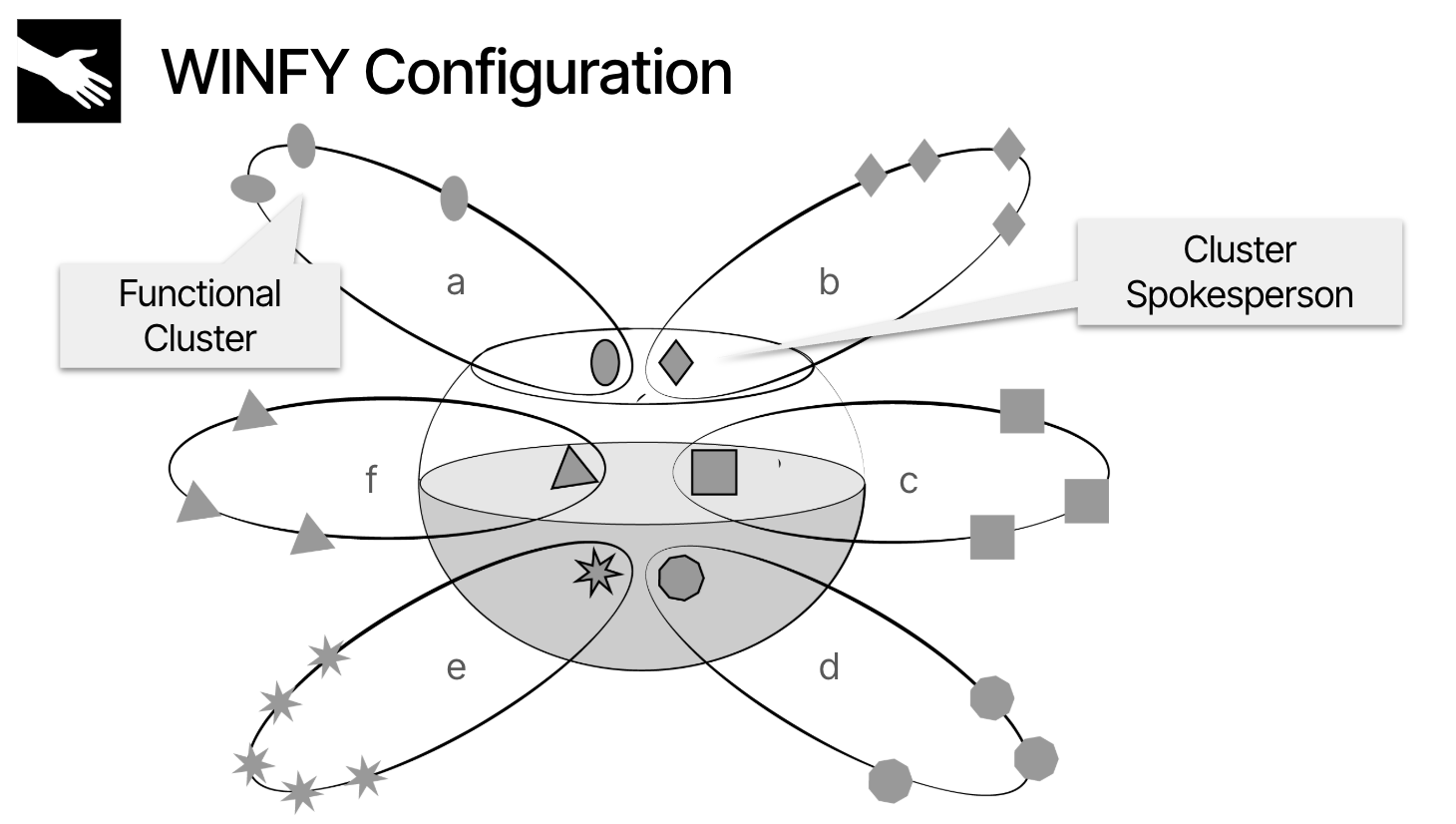
Layout of WINFY functional clusters or breakout groups and spokesperson fishbowl configuration.
Participation Distribution
Roles include host [tech host], spokespeople, and participants. There is no minimum group size. Everyone is invited and has an equal opportunity to contribute.
Group Configuration
Three to seven functional groups, each with any number of participants
Steps and Time Allocation
Intro: Share the structuring invitation and identify a shared goal or challenge. (1 min.) [Prepare breakouts for functional groups.]
Clarify Context: Reiterate the challenge or goal to ensure everyone has the same understanding. Invite two to three participants to share more context. (2 min.)
Explain the Process: Explain that each functional group will make clear and specific requests for what they need from others to make progress. Display WINFY responses (below). Explain what makes a good request. It must be specific, concrete, actionable, relevant, and timely (and may include due dates). (2 min.)
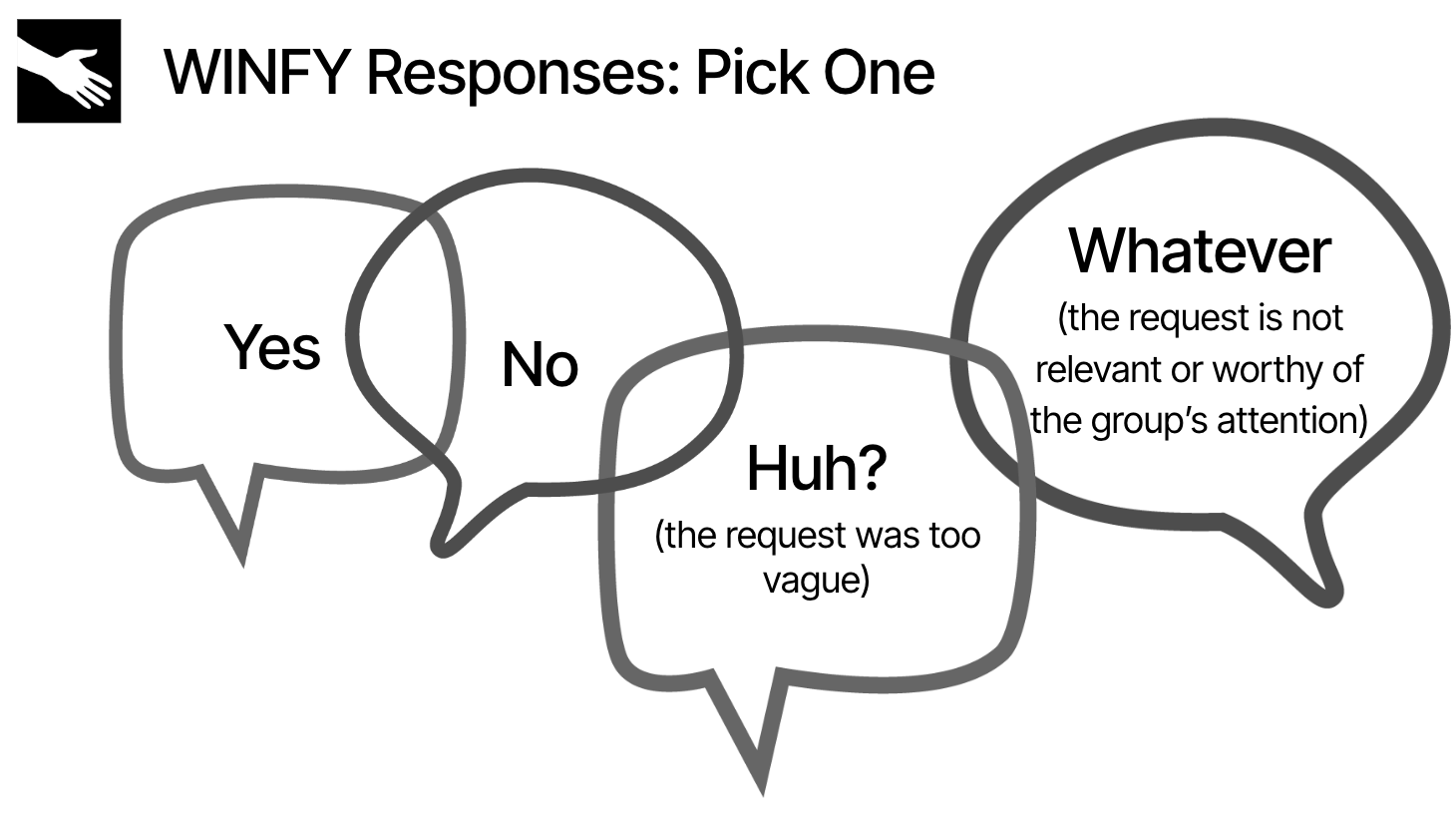
The four WINFY responses (above).
List Needs in Groups: Each group uses 1-2-4-All to list their top needs from each of the other functions. As a group, they select their top one or two needs and write them on sticky notes in the format “What I need from you is _____.” [If using a visual collaboration space, ask people not to look at other groups’ work.] (10–20 min.)
Make Requests: Everyone returns to plenary. Display and explain the four WINFY responses. Spokespeople sit in the center circle [spotlight] to state their needs to each other, one at a time. Spokespeople who are listening write down each request without responding. (15–20 min.)
Decide Responses in Groups: Participants return to their functional groups [breakouts]. They write each request on a sticky note and decide how to respond to it, then write another sticky note with one of the four responses. (5–15 min.)
Share Decisions: Everyone returns to plenary. Spokespeople rejoin the inner circle [spotlight] and share their responses without elaboration. (10 min.)
Debrief: Debrief using What, So What, Now What. (15–20 min.)
Taking It Online
This structure works online with good preparation of breakout rooms and whiteboards in advance. Use a video spotlight for the spokespeople in the main room and have others turn off their cameras.
Practice Insights
Tips
Strictly enforce the rule that the only responses allowed are yes, no, huh?, and whatever. Do not allow spokespeople to respond when hearing a request and do not allow further elaboration when they give responses. Prepare participants to receive harsh feedback.
Riffs and Variations
Do a second round if requests are too vague or too much is unresolved after one round. In the debrief, ask participants to share something that would help achieve the group’s purpose that was not requested. Use WINFY with a small group and have people make personal requests of each other.
Practical Applications
Help a global technical group make decisions. Help top executives give consistent direction. Support hospital managers launching a patient-centered care initiative that requires collaboration from multiple specialties.
Optional String
String together with Integrated~Autonomy, Purpose-to-Practice, and Ecocycle Planning to generate and implement strategy.
Attribution
Liberating Structure developed by Henri Lipmanowicz and Keith McCandless.
Collateral Materials
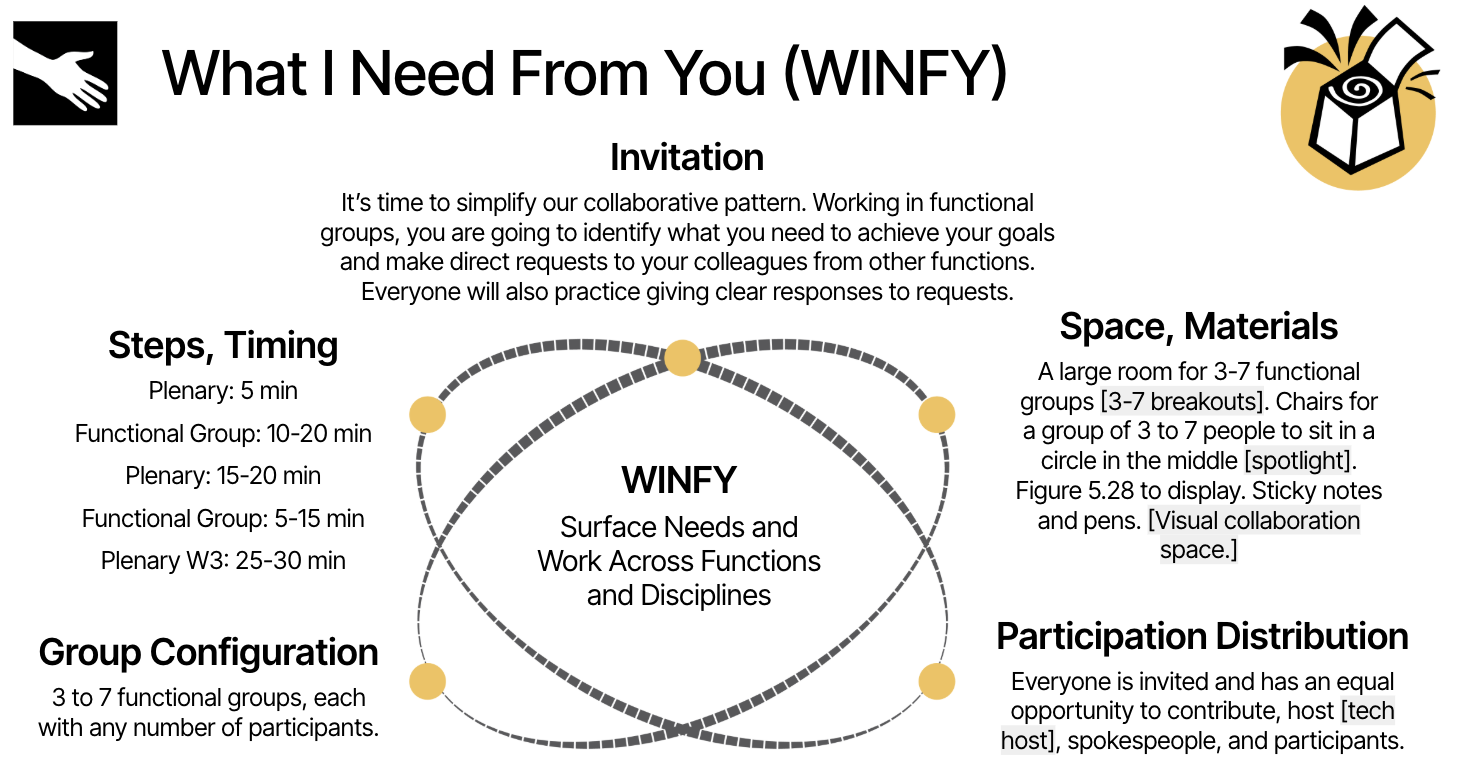
Link to supporting materials for WINFY.
Microstructural elements of WINFY in the constellation format.