
Creative Destruction (aka TRIZ)
Stop Counterproductive Activities and Behaviors to Make Space for Innovation (~50–55 min.)
“Every act of creation is first an act of destruction.”
Purposes
In Creative Destruction, groups imagine how to achieve the worst possible results. By asking “What must we stop doing to make progress on our deepest purpose?” participants can have fun, courageous conversations about letting go. With creative destruction come opportunities for renewal as local action and innovation rush in to fill the vacuum. This structure embodies LS Principle #8, Invite Creative Destruction to Enable Innovation.
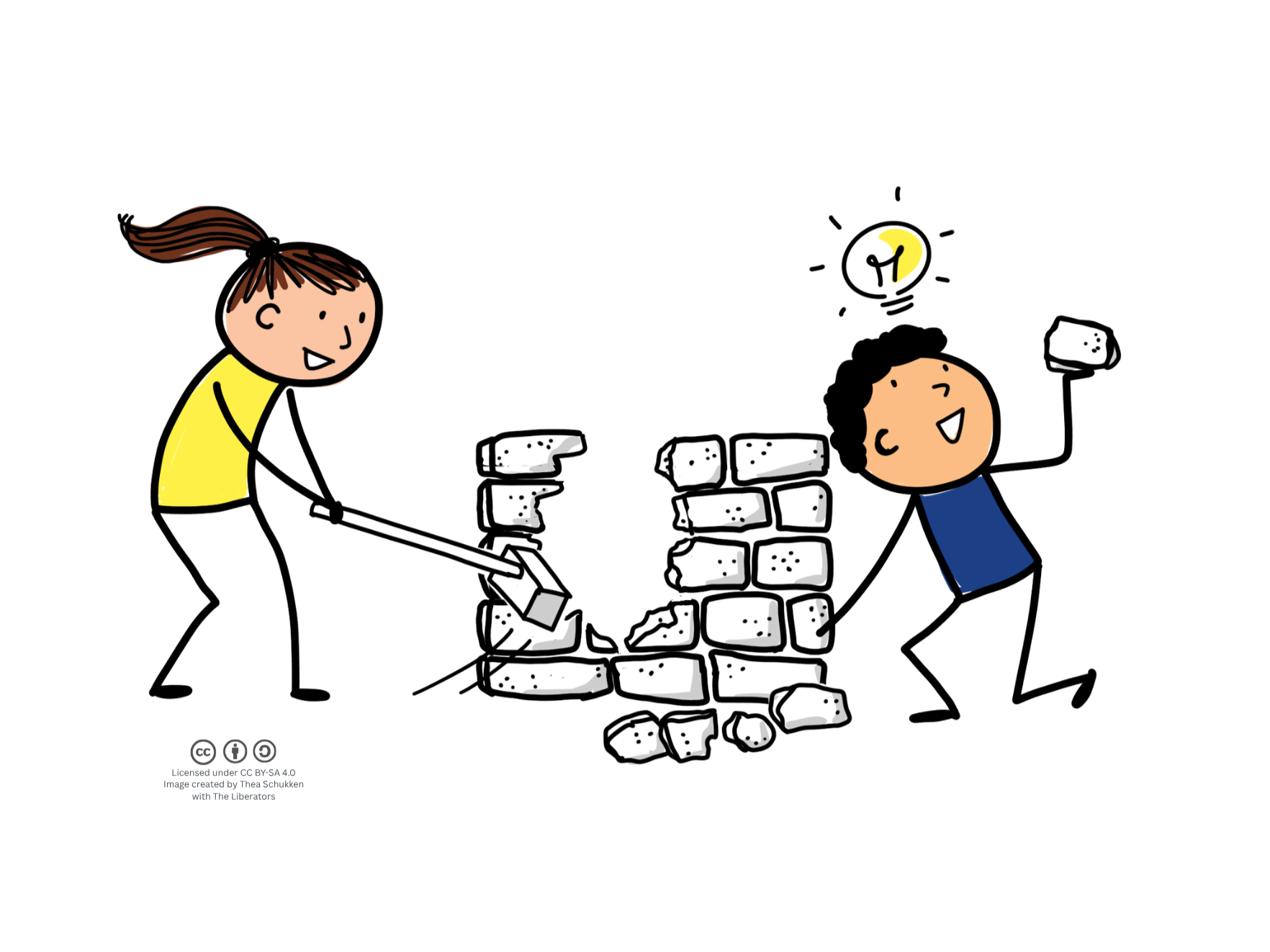
Principle: Invite Creative Destruction to Enable Innovation
Five Structural Elements—Min Specs
Structuring Invitation
“What if we create more room for existing ideas to breathe and evolve (rather than chasing the next big thing)? Let’s make space for innovation by identifying the worst possible result of our work.”
Space and Materials
Groups of four to seven chairs, with or without small tables [breakouts of four to seven]. Paper for everyone and flip charts or whiteboards [chat or visual collaboration space] for each group.
Participation Distribution
Roles include host [tech host] and participants. No minimum group size. Everyone is invited and has an equal opportunity to contribute.
Group Configuration
Alone, groups of four to seven, whole group
Steps and Time Allocation
Intro: Share the structuring invitation. Invite the group to consider the worst possible result of their work and refine if needed. (5 min.)
List Ideas: Display first instruction. Participants work alone to list everything they can do to achieve the worst result. (3 min.)
Combine Lists: Participants form groups of four to seven [breakouts] (or use 1-2-4-All F2F) and combine their lists. (10 min.)
Reckoning: Display second instruction. Groups identify everything they are currently doing that in any way resembles the items on their list. (10 min.)
Destruction: Display third instruction. Groups decide what they need to stop doing to achieve desired results. They identify first steps to stop each counterproductive behavior (using 1-2-4-All F2F). (10 min.)
All-Together Sharing: Groups share their lists of what to stop, and the whole group reflects on what needs to stop and the first steps they need to take. Spotlight inspiring next steps that individual participants have committed to taking. (10–15 min.)
Taking It Online
Creative Destruction can be done as a whole group (1-All) if tech constraints prevent using breakout groups. In this case, you can capture the lists in the chat.
Practice Insights
Tips
Approach the activity with a spirit of serious fun. Be sure participants identify behaviors to stop doing, not new things to start doing, and warn them to be wary of snapback to counterproductive behaviors. If a group is resigned to counterproductive behaviors, take more time to define the “worst result” so it becomes unbearable. In large groups, watch out for premature agreement and encourage people to critically review their lists if it occurs.
Riffs and Variations
Dig deeper with a second round. Have participants make real decisions about what to stop.
Practical Applications
Creative Destruction can be used to reduce harm to medical patients (“How can we make sure we always operate on the wrong side?”), notice the exclusion of diverse voices (“How can we devise policies and practices that only work for a select few?”), or define a purpose for IT professionals (“How can we make sure we build an IT system that no one will want to use?”). Use Creative Destruction before or in place of visioning sessions in any context.
Optional String
After sharing action steps, dig deeper with Troika Consulting, Wise Crowds, or Options Place. Link findings to Ecocycle Planning.
Attribution
Liberating Structure developed by Henri Lipmanowicz and Keith McCandless. Dig deeper into TRIZ, a Russian engineering approach.
Collateral Materials
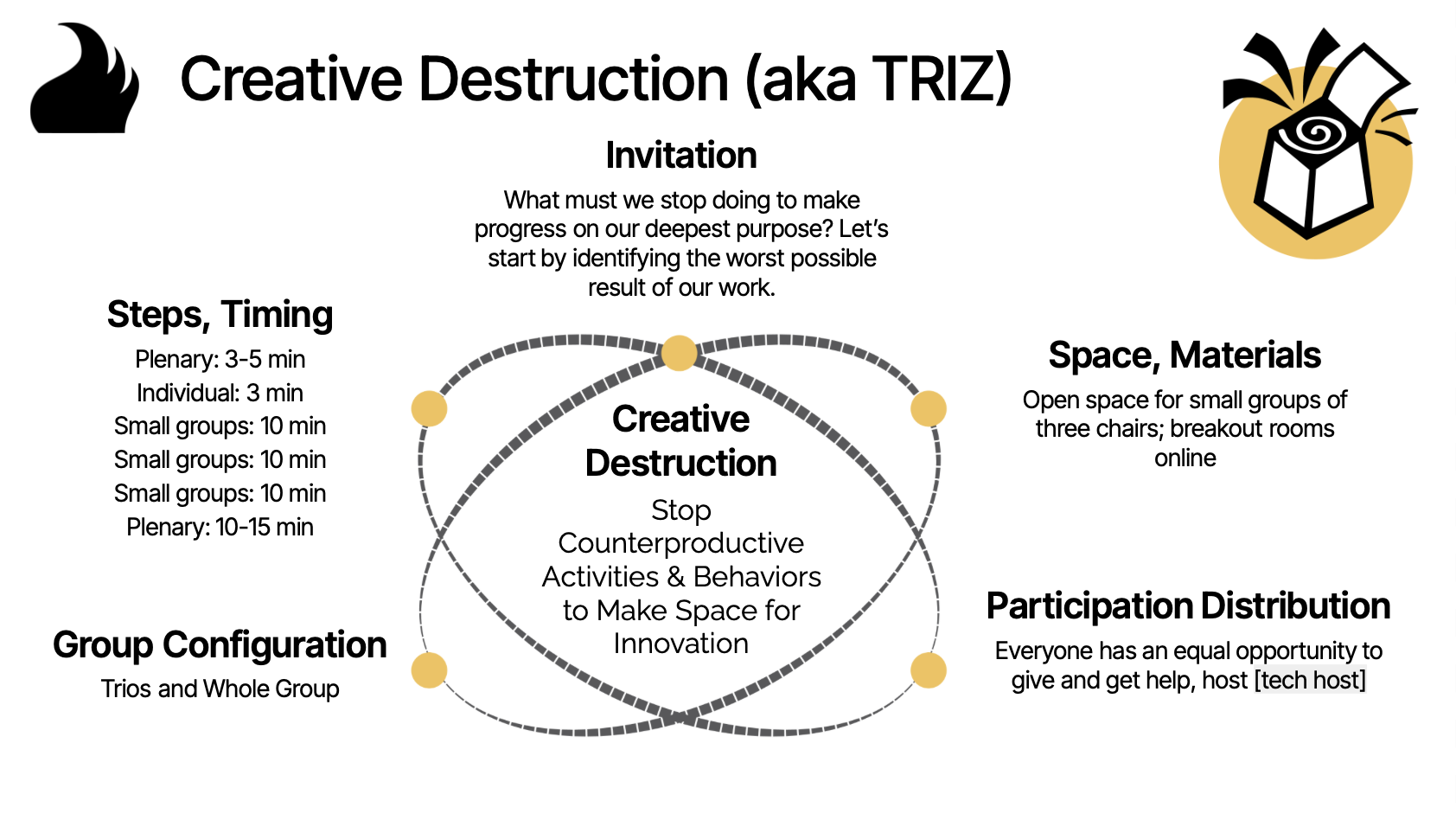
Link to supporting materials for Creative Destruction.
A one-slide overview of the elements of Creative Destruction in the LS constellation format.