

Talking with Pixies
Identify Beliefs and Assumptions That May Limit Your Progress (~30–95 min., ~15–20 min. per round)
“Not everything that is faced can be changed, but nothing can be changed until it is faced. ”
Purposes
In Talking with Pixies, a participant at a crossroads shares a challenge and hears from “pixies” who chatter chaotically with two dramatically opposed points of view. This structure can help reveal new possibilities for moving forward and build understanding and empathy for people in the midst of making a change. The goal is to identify outdated or limiting beliefs and assumptions that may be blocking progress, embodying LS Principle #8, Invite Creative Destruction to Enable Innovation.
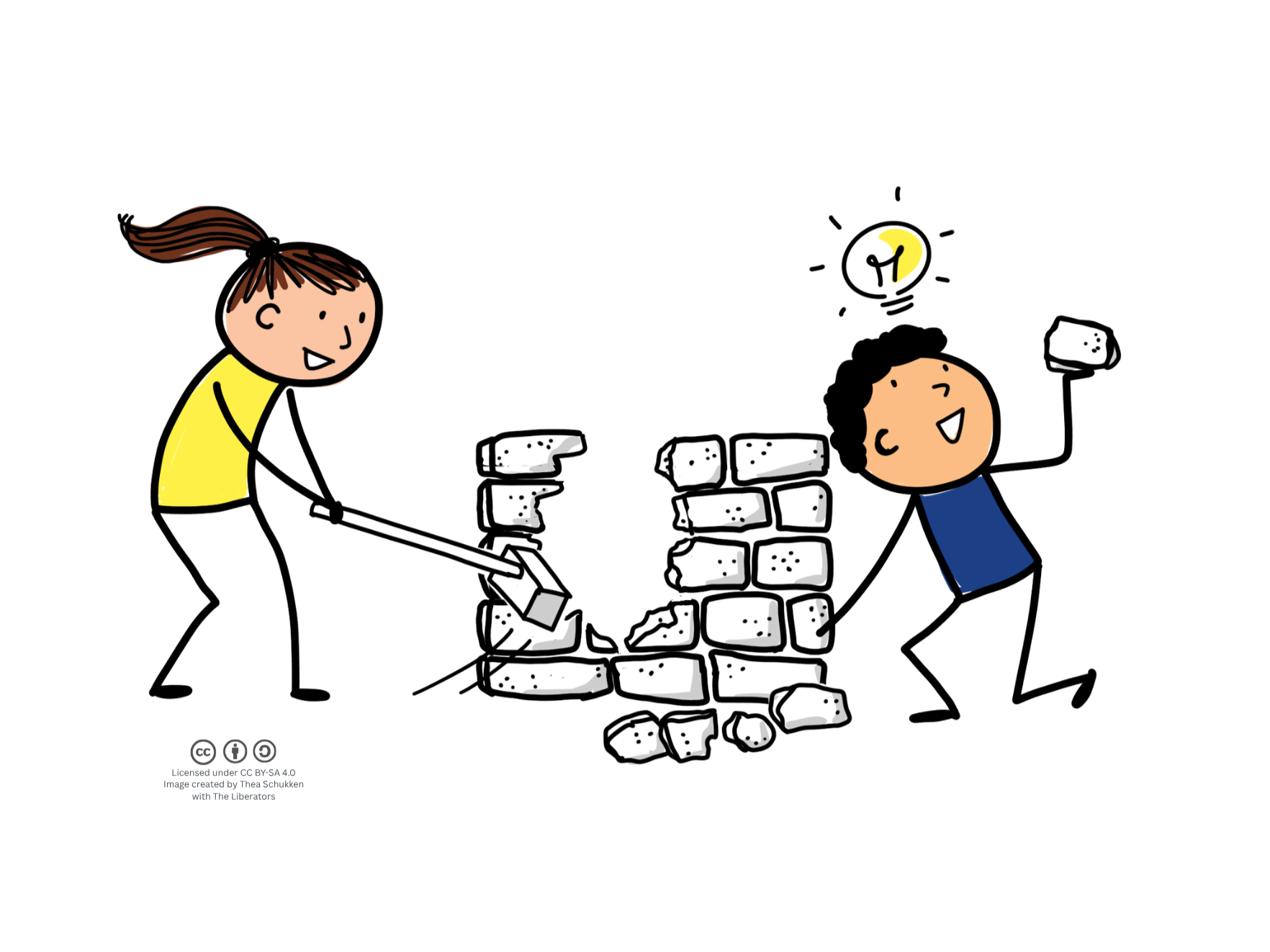
Principle: Invite Creative Destruction to Enable Innovation
Five Structural Elements—Min Specs
Structuring Invitation
“You are invited to explore a crossroads you face now and consider competing commitments that limit progress or immobilize change. We are going to assemble a team of pixies, or voices on your shoulder, to help you.”
Space and Materials
Groups of four chairs [breakouts of four]. Display the Steps and Interviewer questions [in the chat or on a slide].
Talking with Pixies
Interviewer Questions
Why is the goal important to you? Why are you bothering? How will others around you benefit?
What actions have you taken to advance AND undermine progress toward the goal? Dig for tangible examples and stories, not concepts.
Give more attention to an action or behavior that undermines. Why were you attracted to the actions that undermine? Why… Why…
What will happen if you stop the behaviors that advance your goal? What might people say about you? What will happen to those around you?
What will happen if you stop the behaviors that undermine your goal? What might people say about you? What will happen to those around you?

Participation Distribution
Roles include host [tech host], listener, interviewer, innovator pixie, and protector pixie. Minimum group size is four. Each person gets the chance to experience each role.
Group Configuration
Alone, quartets, whole group.
Steps and Time Allocation
Intro: Share the structuring invitation. (1 min.)
Individual Reflection: Participants think of a current challenge that makes them feel stuck or unsure how to proceed. This is their “crossroads.” Next, they think of a related goal—what they truly desire at this crossroads—that feels important but hard to reach. (2 min.)
Demonstration: Invite a volunteer who is willing to share their crossroads and three others to the front of the room [spotlight the volunteers]. The first volunteer is the “listener,” and the other three are the “interviewer,” the “innovator pixie,” and the “protector pixie.” The interviewer sits across from the listener, and the pixies sit on either side of the listener [lean into the camera]. Define the roles.
Listener Role. Close your eyes and listen empathetically as your inner “pixies” chatter without you responding.
Interviewer Role. Gently draw out the listener’s details and emotions, keep the group on schedule, redirect the pixies if needed, and pause if the listener becomes uncomfortable.
Pixies Roles. Listen for the listener’s competing commitments and assumptions, then chatter empathetically from their perspective. The innovator pixie enthusiastically highlights the potential benefits of embracing change and letting go of outdated commitments. The protector pixie emphasizes the risks of change and advantages of sticking with current commitments.
Have the volunteers briefly demonstrate the steps, giving instructions before each step. Thank them and send them back to their seats [end spotlight]. (6 min.)
Form Groups and Select Roles: Display Figure 5.49 [paste questions in the chat]. Participants form quartets [breakouts] and choose roles. [all roles keep cameras on.]
Process: Small groups repeat this process for each person who wants to be a listener (15–20 min. per round).
Sharing Crossroads. The listener describes their challenge and goal. (3 min.)
Interview. The interviewer asks the interview questions. The pixies listen and take notes. (4 min.)
Pixie Whispers. The listener closes their eyes while the two pixies sit close to the listener’s ears, lean in, and simultaneously whisper their perspectives. (1–2 min.)
Pixie Insights. The listener opens their eyes and each pixie takes two minutes to share their perspective in a clearer, less chaotic way. (4 min.)
Small-Group Reflection. The group briefly shares thoughts and feelings about the experience. (3 min.)
All-Together Sharing: Everyone returns to plenary to discuss the overall experience. What did they learn about competing commitments? How did the pixies’ chatter impact their personal perspectives? A few people share reflections everyone should hear [aloud or in the chat]. (4 min.)
Taking It Online
Be aware that facial expressions, body language, and tone of voice make a difference with Talking with Pixies, and it’s easy to miss these signals online. Give the option for the listener to end the simultaneous whispering at any time; online audio can be jarring rather than productive. If simultaneous whispering is too disruptive, have Pixies take turns with rapid short phrases.
Practice Insights
Tips
Encourage honesty, empathy, and imagination, especially for the pixies. Pixies should avoid giving advice or next steps. They should playfully explore the listener’s competing commitments and assumptions without judging them. This structure requires and builds trust among participants, so avoid using it in groups with low trust or too early in a group’s time together.
Riffs and Variations
Invite both pixies to chatter simultaneously for longer—for several minutes or until the listener tells them to stop. Have the pixies join forces, supporting the innovator perspective and then the protector perspective.
Practical Applications
Support a manager struggling to provide critiques, a faculty member considering a new leadership position, or a leader wrestling with a strategic challenge.
Optional String
Follow with Spiral Journal or Positive Gossip to bring attention back to the present moment. Combine with User Experience Fishbowl to allow a large group to listen as a leader talks with their pixies.
Attribution
Codeveloped by Ian Prinsloo, Keith McCandless, and members of the Seattle LS user group. Dig deeper by exploring the “immunity to change” dynamics described by Robert Kegan and Lisa Lahey.
Collateral Materials
Link to supporting materials for Talking with Pixies.
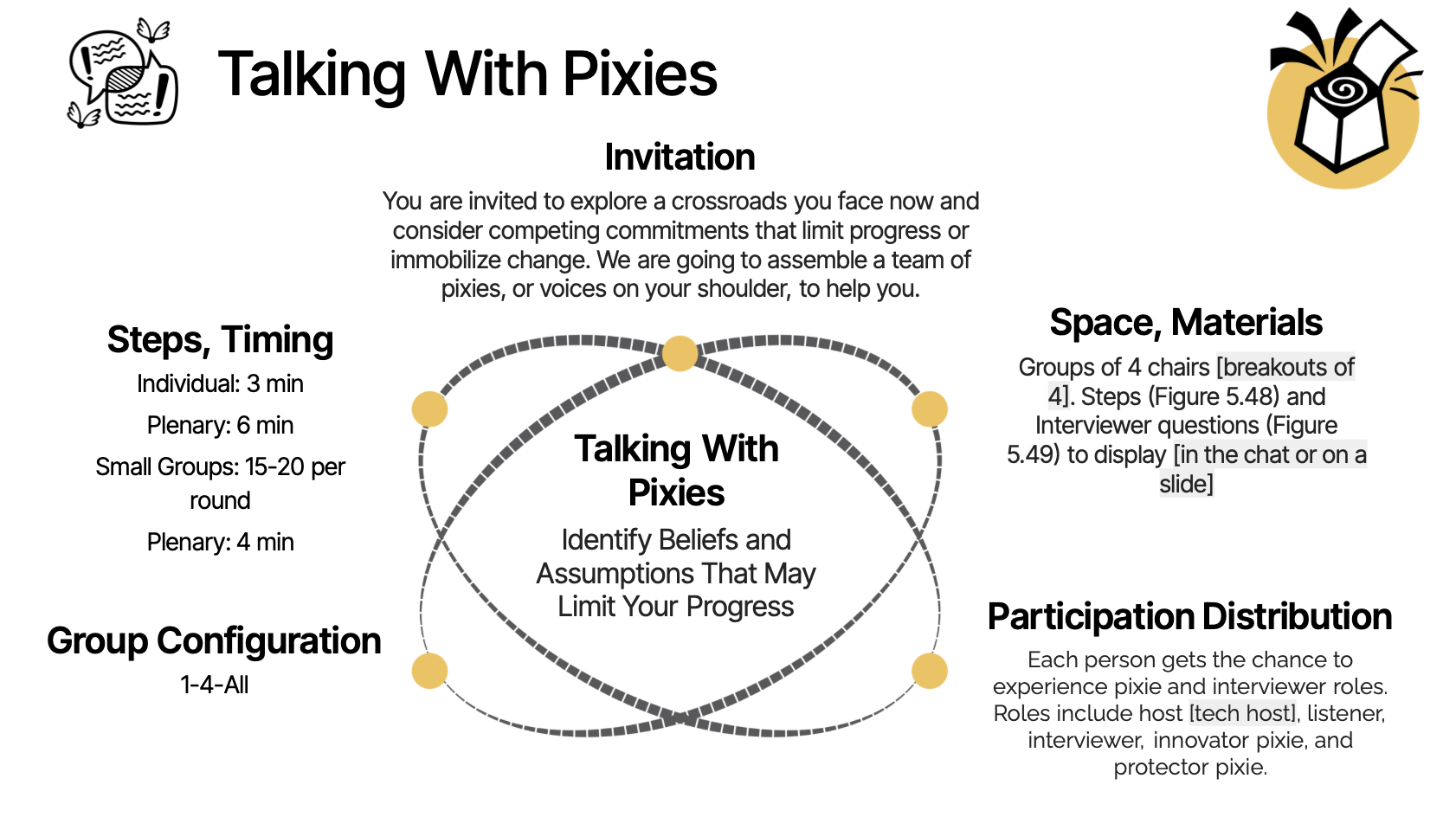
A one-slide overview of the elements of Talking with Pixies in the LS constellation format.