

Purpose-to-Practice (P2P)
Design the Five Essential Elements for a Resilient and Enduring Initiative (~125 min.)
“Very real crises mark our time. And as much as we might like it otherwise, it appears that doing what we have always done, only harder, will not solve them.”
Purposes
In P2P, participants collectively define the five essential elements of their work together: Purpose, Principles, Participants, Structure, and Practices. This structure is ideal for launching an initiative because it builds a foundation that makes the group flexible, adaptable, and ready for challenges. It helps develop higher- order goals and innovative strategies that can be implemented quickly due to shared ownership. P2P reinforces LS Principle #10, Never Start Without Clear Purpose(s).
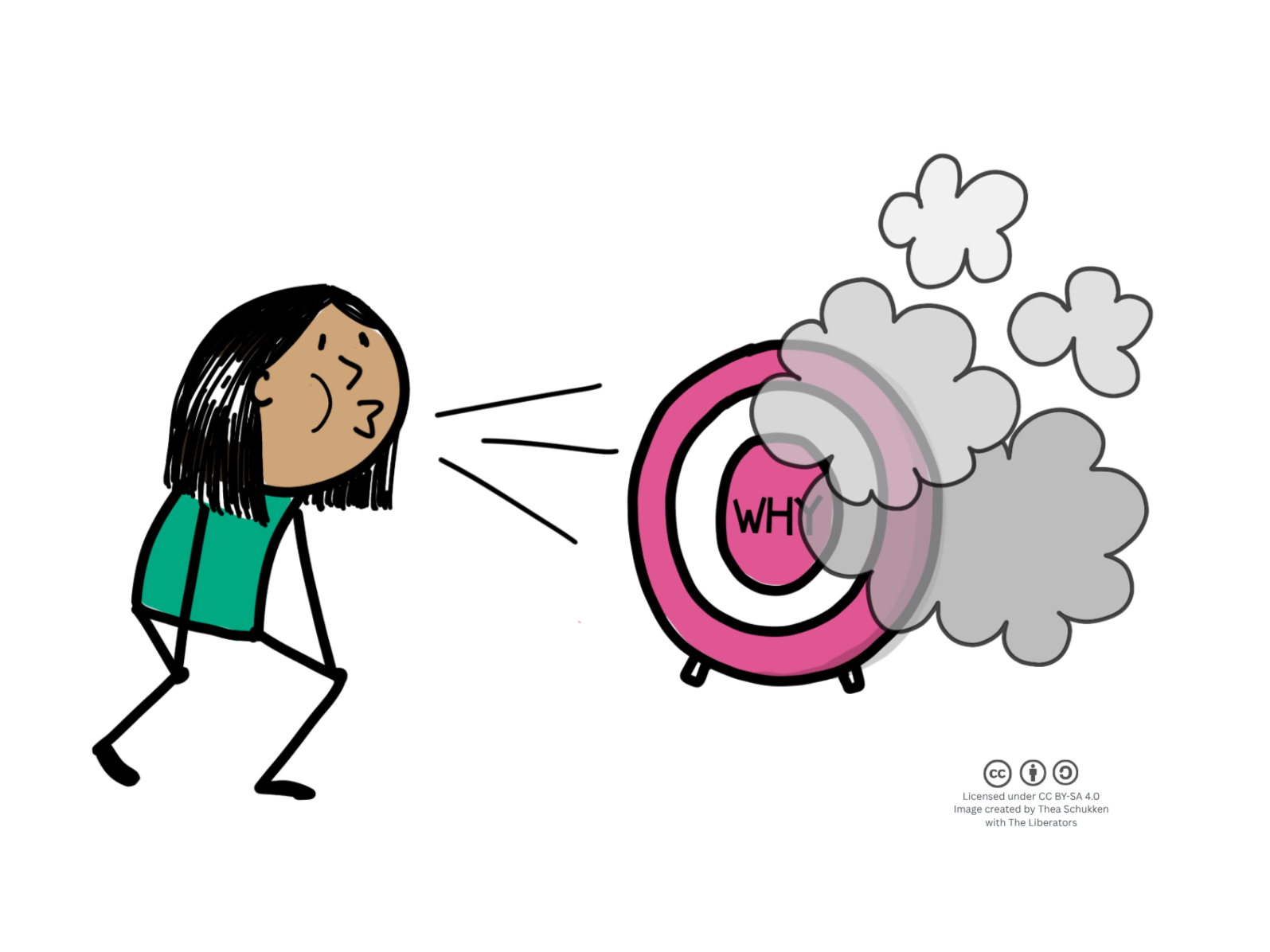
Principle: Never Start Without a Clear Purpose
Five Structural Elements—Min Specs
Structuring Invitation
“Imagine we are a group of explorers mapping out steps for our big adventure. We start with a compass for setting a clear direction and correcting course when we lose our way based on our shared purpose and the principles we agree to follow.”
Space and Materials
An open wall with a P2P template [digital version in a visual collaboration space]. Groups of four chairs around small tables. Copies of the P2P template and sticky notes for each F2F participant.
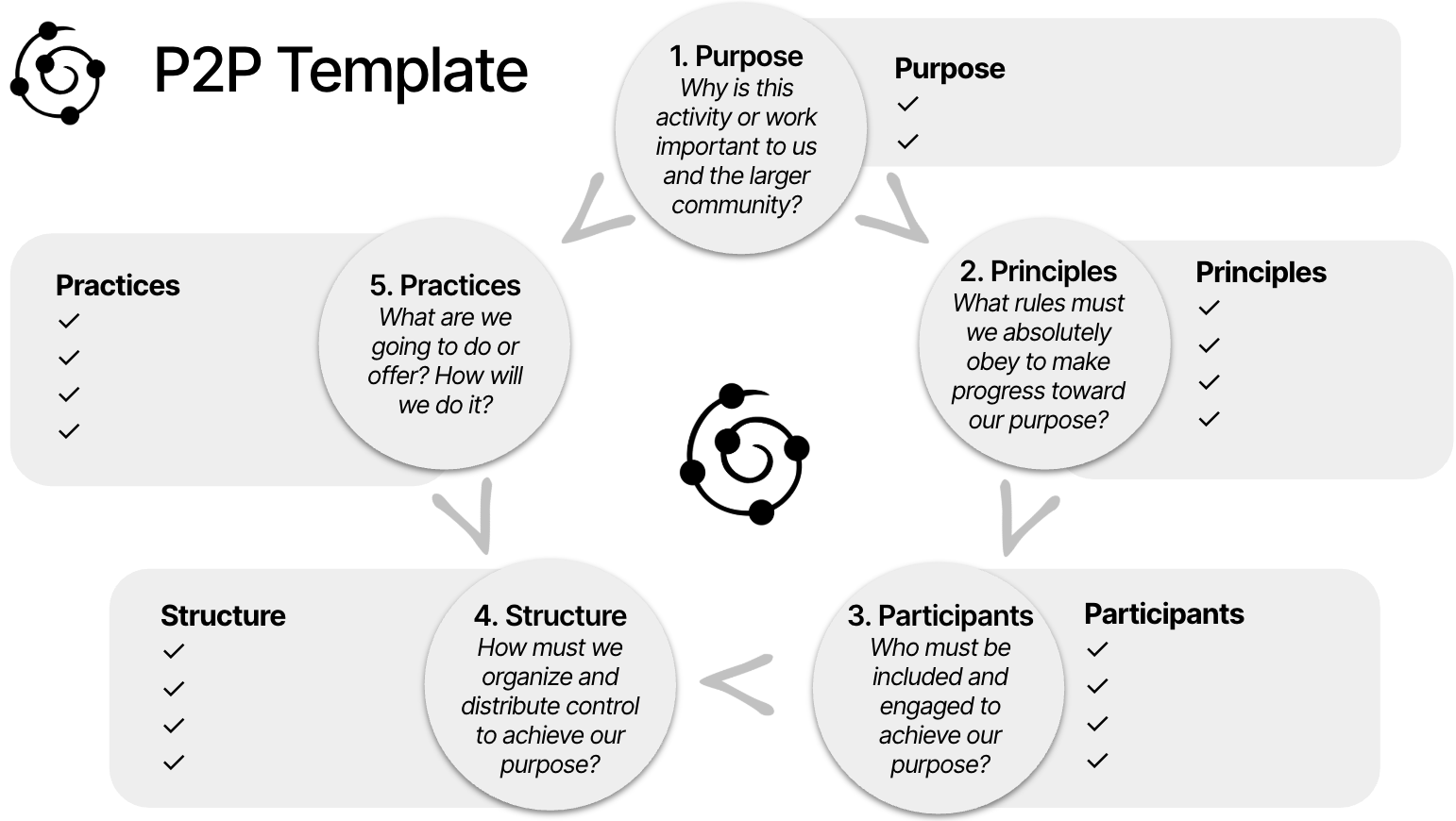
Purpose-to-Practice Template
Participation Distribution
Roles include host [tech host] and participants. There is no minimum group size. Everyone with a stake in the initiative is invited and has an equal opportunity to contribute.
Group Configuration
1-2-4-All [1-3-All]
Steps and Time Allocation
Intro: Share the structuring invitation and hand out templates [everyone draws their own]. (2 min.)
Instructions: Introduce the five key elements and the questions the group will use to clarify them.
Purpose. Why is this activity or work important to us and the larger community?
Principles. What rules must we absolutely obey to make progress toward our purpose?
Participants. Who must be included and engaged to achieve our purpose?
Structure. How must we organize and distribute control to achieve our purpose?
Practices. What are we going to do or offer? How will we do it? (5 min.)
Clarify Purpose in Small Groups: Participants form quartets [breakouts] and use 1-2-4-All [1-3-All] to generate ideas and stories for Purpose. (10 min.)
Finalize Purpose: Everyone returns to plenary. A few small groups share their ideas. Consolidate them into one purpose and write it on the shared template. (10 min.)
Complete P2P Elements: Follow the same Clarify and Finalize steps for the next four elements. Be prepared to go back and revise previous elements as needed. (four rounds of 20 min. each)
Reflection: Everyone steps back to look at the whole draft. Participants create new quartets [breakouts or use Chatterfall] and use W3 to generate and prioritize next steps. (15 min.)
Plan Follow-Up: Participants plan when they will revisit the P2P chart. (3 min.)
Taking It Online
Participants move between the main room and breakouts multiple times. Keep groups consistent and use a visual collaboration space to summarize steps. Broadcast messages or voice reminders to keep groups on track.
Practice Insights
Tips
Crafting a powerful and attractive purpose is the most important step. For the Participants step, invite people to expand beyond the obvious. For the Structure step, invite people to explore patterns and technologies that distribute control to people closest to the local work. Avoid getting bogged down in the details of Structure, which may require more exploration.
Riffs and Variations
Start with a thirty-minute rapid cycle to illustrate the need for a clear purpose; without one, it’s easy to end up with a half-baked design. Use visual symbols for each of the five elements to keep participants focused. Add more questions to enrich the conversation about Practices: “What is happening around us that creates an opportunity? What is at stake if we do not take a risk? Where are we starting, honestly?”
Practical Applications
Use P2P to launch a movement. Bring people together to work toward a common aim. Use P2P as a first step in developing grant proposals.
Optional String
Use a different LS for developing each of the key elements, such as 9 Whys for Purpose, Appreciative Interviews for Principles, Social Network Webbing for Participants, Network Relationship Patterns for Structure, and Options Place for Practices. When P2P involves launching a new activity or relationship, make space for it with Creative Destruction. Use Network Relationship Patterns to help teams visualize preferred structures for different aspects of their organization.
Attribution
Liberating Structure developed by Henri Lipmanowicz and Keith McCandless. Dig deeper by exploring the pioneering work of Dee Hock and the Chaordic Commons.
Collateral Materials
Link to supporting materials for Purpose to Practice.
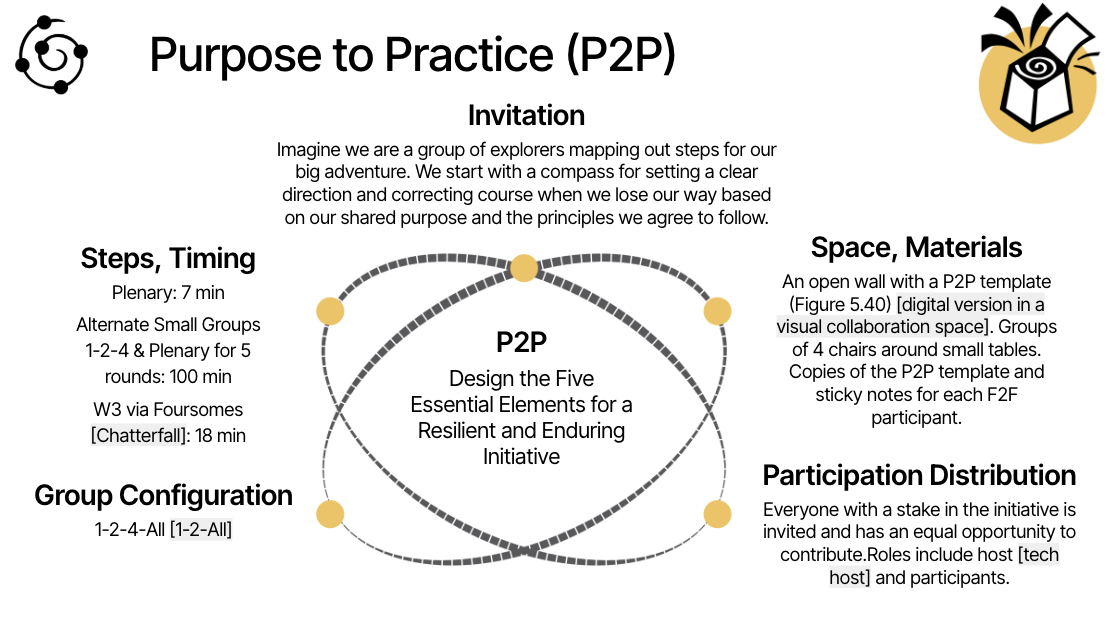
Microstructural elements of P2P in the constellation format.