
Precisely Ambiguous: An invitation that saved lives
There are paradoxical-yet-complementary tensions inherent in our work. The goal of this post and Wicked Questions is to move beyond "either-or" thinking and spark deeper, wider explorations of new options.
The Wall of Cynicism
When the Billings Clinic in Montana joined a national superbug prevention project, Nancy Iversen, the Director of Patient Safety, faced a "wicked" problem. The science was clear: wash hands, clean surfaces, isolate patients, wear PPE. But the culture was resistant and practice was spotty.
A Wicked Question comes to mind:
How is it that we ache for a breakthrough fix that changes everything WHILE we hesitate to embrace an approach in which the real problems and solutions become clear only as we explore them?
Cynicism ran deep. Staff were tired of "Wash Your Hands" signs and top-down mandates. Infection control professionals were teased as "Infection Perfectionists." Nancy knew that more "imported best practices" would be met with an eye-roll and a shrug. To spark genuine change, she needed something more powerful than a mandate. She needed a Purpose linked to a specific invitation to participate.
The Struggle for Clarity
For months, Nancy struggled to find the right words. Initial attempts were clinical and flat:
"Improve clinical performance indicators." (Ignored by the frontline).
"Get people to routinely practice prevention." (Lacked punch).
Success with Liberating Structures hinges on the "Invitation." If the purpose isn't compelling, the structure won't hold. Nancy needed a purpose statement that was "precisely ambiguous"—specific enough to name the threat, but broad enough for a janitor, a surgeon, and a nurse to each find their own way to solve it.
The Turning Point
Finally, a leap forward emerged: "Stop the transmission of superbugs to patients and people working on this unit."
This wasn't just a project; it was a higher-order goal with a compass.
"Stop the transmission" named the specific enemy.
"Patients and people working" made it personal and mutual.
"On this unit" gave everyone the permission to own their local space and solutions.
Structuring the Invitation
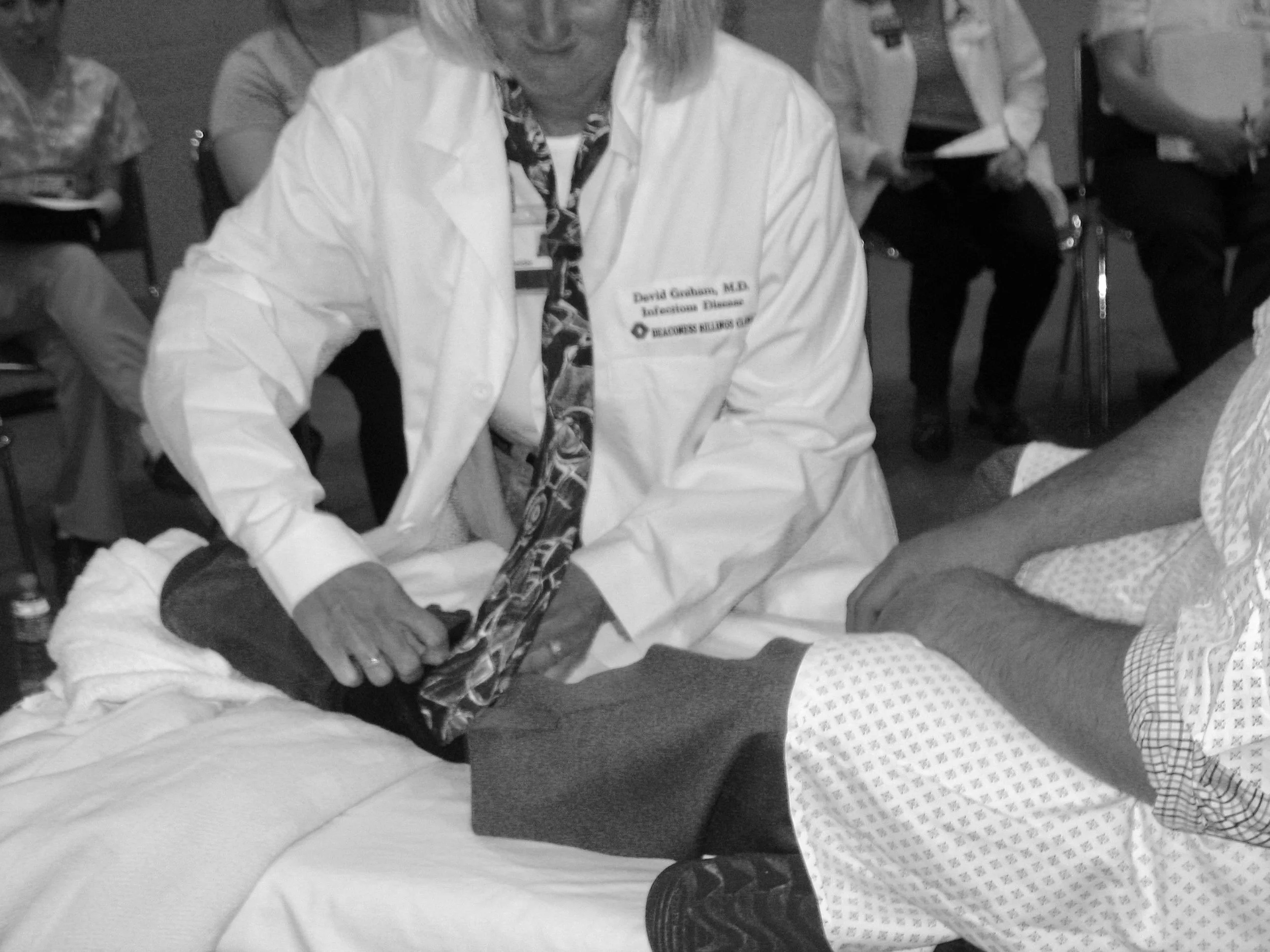
Improv Prototyping underway at the Billings Clinic. The scene focused on what clinicians can stop doing when visiting patients with superbug infections–don’t wear a tie or examine a wound without PPE (personal protective equipment).
With this clear purpose, Nancy could now compose invitations that sparked immediate action. Instead of a lecture, she used Creative Destruction (formerly named TRIZ), asking:
"What are all the things we can do to reliably transmit superbugs to our patients and colleagues on this unit?"
Suddenly, the room was alive. Staff laughed as they listed every shortcut and messy habit they’d ever seen. Then, they used that list to identify what they had to stop. They followed this with Discovery and Action Dialogues (DADs) to find the "positive deviants"—the people who were already finding clever ways to stay safe despite the extreme demands of a busy ward.
The Result: Ownership Over Compliance
The shift was tectonic. Prevention moved from being a "management requirement" to a "peer-to-peer commitment." Because the purpose was anchored "on this unit," the solutions weren't imported—they were homegrown.
Nancy’s "precisely ambiguous" purpose didn't just reduce infections and save lives; it reduced the distance between the staff and their power to act.
[read a more scholarly article about superbug prevention work and LS: Zimmerman, B., et al. (2013) Front-line ownership: generating a cure mindset for patient safety. Healthcare Papers 13(1) 6-23.]
Liftoff
The "Boredom" Audit: Look at your current project goals or mission statements. Are they " “flat" mandates that people ignore, or do they name a specific problem or opportunity that people have a personal stake in and can own?
The Power of the Paradox: What is a current challenge where you have been pushing for "compliance"? How might you flip the script using Creative Destruction (formerly named TRIZ) or Wicked Questions to let the group discover what they must stop doing or shape restorative next steps?
Locating the Action: If you narrowed your current "higher-order goal" to focus only on what happens "on this unit" (in your specific group or local space), how might that change the sense of responsibility and the speed of action?
